Frequently Asked Questions
How do I apply artificial grass glue?
Applying artificial grass glue involves spreading it evenly on the seaming tape or base, then pressing the turf seams firmly into the adhesive.
What types of turf glue are available?
Several types of turf glue are available, including water-based, solvent-based, and polyurethane adhesives, each suited for different applications and conditions.
Are there safety precautions for using astro turf glue?
Safety precautions for using astro turf glue include ensuring good ventilation, wearing gloves and eye protection, and avoiding skin contact. Always follow manufacturer instructions for safe application.
What tools do I need for applying turf glue?
You will need a notched trowel for even spreading, a caulk gun for seam tape application, and a roller to ensure proper adhesion of the turf glue.
Can I use artificial grass glue for other materials?
Artificial grass glue is specifically formulated for turf and sub-surfaces; using it on other materials may yield unpredictable results or damage.
What is the best method to apply turf glue?
The best method to apply turf glue involves using a notched trowel for even distribution, ensuring a consistent bond.
How long does artificial grass glue take to dry?
Artificial grass glue drying time varies, but most require 24-48 hours for full curing. Factors like temperature and humidity can affect this timeframe.
Can I use turf glue in wet conditions?
Using turf glue in wet conditions is not recommended. It can compromise adhesion and lead to premature failure of the turf installation.
What surfaces are suitable for turf glue application?
Surfaces suitable for turf glue application are typically dry, clean, and stable. This includes concrete, asphalt, compacted aggregate, and wood.
How do I remove excess turf glue?
Removing excess turf glue involves scraping it while wet or using a solvent for dried glue. Always test solvents in an inconspicuous area first.
Is turf glue environmentally friendly?
Turf glue's environmental friendliness varies; opt for water-based, low-VOC options for a more eco-conscious choice.
What is the shelf life of turf glue?
The shelf life of turf glue typically ranges from 6 to 12 months when stored properly in a cool, dry place.
How do I store artificial grass glue properly?
Proper storage of artificial grass glue involves keeping it in a cool, dry place, sealed tightly, and away from extreme temperatures and direct sunlight to maintain its efficacy.
Can I use turf glue for indoor applications?
Yes, turf glue can be used for indoor applications. Ensure adequate ventilation and choose a low-VOC, water-based adhesive for safety and optimal results in enclosed spaces.
What are common mistakes when applying turf glue?
Common mistakes when applying turf glue include improper surface preparation, uneven application, and not allowing adequate drying time, leading to weak adhesion and premature failure.
How do I ensure a strong bond with turf glue?
Ensuring a strong bond with turf glue involves proper surface preparation, applying the correct amount of glue evenly, and allowing adequate curing time for optimal adhesion.
What is the recommended temperature for applying turf glue?
The recommended temperature for applying turf glue is between 40°F and 90°F (4°C and 32°C). Avoid application in extreme heat or cold for optimal adhesion.
Are there different formulas for turf glue?
Yes, there are different formulas for turf glue, designed for various applications and environmental conditions, ensuring optimal adhesion and durability.
How do I clean tools after using turf glue?
Cleaning tools after using turf glue involves prompt action. For wet glue, use a solvent like mineral spirits or denatured alcohol. For dried glue, scraping may be necessary.
What are the signs of improper turf glue application?
Signs of improper turf glue application include seams lifting, uneven adhesion, or visible glue residue. This can lead to premature wear and a poor aesthetic finish.
Can I paint over dried turf glue?
Painting over dried turf glue is not recommended as paint may not adhere properly and could compromise the glue's bond.
How do I troubleshoot turf glue adhesion issues?
Troubleshooting turf glue adhesion issues involves checking surface preparation, glue application, and environmental conditions for optimal bonding.
What is the best way to apply glue evenly?
The best way to apply glue evenly involves using a notched trowel or a specialized applicator for consistent coverage, ensuring a strong and seamless bond.
Are there alternatives to traditional turf glue?
Alternatives to traditional turf glue exist, including specialized adhesives, seam tapes, and anchoring systems, offering different installation methods and durability.
How do I choose the right turf glue?
Choosing the right turf glue depends on your specific project needs, considering factors like weather resistance, application surface, and desired durability for a secure and long-lasting installation.
What safety gear should I wear when using turf glue?
When using turf glue, wear gloves and safety glasses. Ensure good ventilation or wear a respirator for optimal safety.
How can I test turf glue effectiveness?
Testing turf glue effectiveness involves a simple pull test after proper curing. Apply the glue, let it cure fully, then attempt to pull the turf away to check adhesion strength.
What is the difference between turf glue types?
The difference between turf glue types lies in their application, bonding strength, and environmental suitability, impacting installation methods and durability.
Can turf glue be used for outdoor furniture?
Turf glue is designed for artificial turf installation, not for outdoor furniture. Its adhesive properties may not be suitable or durable for furniture materials and outdoor conditions.
How do I apply turf glue in cold weather?
Applying turf glue in cold weather requires elevated temperatures. Ensure the glue and surface are above 40°F (4°C) for optimal adhesion and curing.



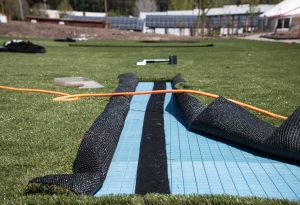 At Artificial Turf Express, we’re often asked several questions about artificial turf glue. Turf glue can come in many different thicknesses or quantities. Some types of glue are more appropriate for certain applications, and less effective for others. Here are some of the questions we’re asked most often.

