

Selecting the correct putting green turf requires a clear understanding of three core performance variables: pile height, ball speed, and roll. These variables determine how the ball interacts with the surface and, therefore, how useful the green is for practice or play. This guide breaks down those relationships, specifies recommended ranges, and outlines installation and maintenance considerations so you can choose turf that meets performance goals without sacrificing durability.
Pile Height:
Pile height denotes the measured length of the turf fibers above the backing. It controls the contact area, friction, and the resultant ball behavior. Shorter pile (closer to 0.5 inches) reduces friction and improves control and speed, which suits practice greens for serious players. Taller pile (toward 1.5 inches and above) increases cushioning but introduces variability in roll, making it better for casual or aesthetic installations. Match pile height to your intended use and desired ball performance.
Ball Speed:
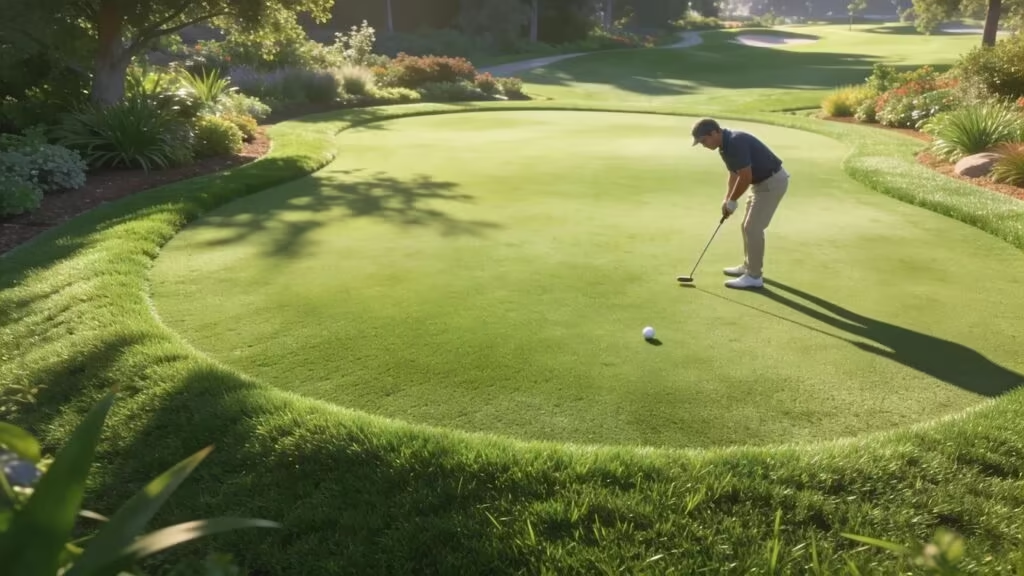
Ball speed is a function of pile height, fiber material, density, and infill. Short fibers and high fiber density yield faster, more consistent speeds by minimizing deformation and surface drag. Infill type alters surface firmness and micro-texture—sand infill typically increases speed compared with softer organic or rubber infills. Specify the pile height, fiber type, and infill together to achieve the target green speeds.
Roll Characteristics:
Roll quality depends on surface uniformity, fiber resilience, and infill distribution. A consistent, even surface with uniform fiber orientation and well-graded infill produces predictable roll and minimal deviation. Maintenance that preserves surface flatness and keeps the infill level is equally important for repeatable roll performance.
Material Type:
There are various types of materials used in putting green turf, and each offers distinct characteristics beneficial for specific applications.
- Polyethylene: Known for its durability and realism, making it a popular choice for home installations.
- Polypropylene: Usually more affordable, though less robust than polyethylene.
Comparing tensile strength, UV stability, and fiber resilience between polyethylene and polypropylene clarifies the trade-offs among realism, cost, and lifespan. Review technical specs—denier, gauge, and UV-treatment—when evaluating products to ensure performance matches application needs.
| Material Type | Characteristics | Benefits |
|---|---|---|
| Polyethylene | Soft, durable | Realistic appearance, comfortable underfoot |
| Polypropylene | Cost-effective | Good for lighter use, more affordable |
Review supplier datasheets and sample installations from vendors such as Artificial Turf Express to compare material properties and field performance before finalizing a selection.
Infill and Backing:
Infill and backing systems determine cushioning, vertical resilience, and drainage. Common infill options—crumb rubber, silica sand, and organic blends—vary in density and abrasion characteristics, which affect ball speed and surface firmness. Backing quality influences seam stability and dimensional stability; choose backing and adhesive systems rated for expected loads and environmental exposure.
Usage Considerations:
Define the primary use before specifying turf. Performance greens demand tighter tolerances and shorter pile heights; practice greens require realistic roll characteristics; backyard installations prioritize comfort and appearance. Matching turf selection to intended use reduces compromise between playability and longevity.
- Performance Greens: Designed for serious players, featuring shorter pile heights and premium infill materials.
- Practice Greens: Focus on replicating real golf course conditions, often with medium-height turf.
- Backyard Installations: Emphasis on aesthetics and comfort, leading to taller pile heights for an appealing look.
Select products and installation methods that align with the defined use case to optimize both playability and lifecycle costs.
What Is Putting Green Turf and Why Is It Important?
Putting green turf is engineered artificial grass formulated to replicate the ball response and surface consistency of natural greens. Its value lies in delivering repeatable roll and predictable speeds for training and play, while offering durability for frequent use. Understanding construction—pile height, fiber composition, density, infill, and backing—helps specify a surface that meets performance requirements.
What Are the Main Types of Artificial Turf for Putting Greens?
Identifying main turf categories clarifies expected performance. Material, pile configuration, and installation method combine to define playability and maintenance needs. Common categories include polyethylene, polypropylene, and hybrid systems that blend synthetic and natural components.
- Polyethylene: Best for a realistic feel and durable applications.
- Polypropylene: Suitable for budget-friendly projects with lighter usage.
- Hybrid Turf: Mixing natural and synthetic fibers for enhanced performance.
Each category targets different priorities—realism, cost-efficiency, or hybrid performance—so match the type to the user’s performance targets and maintenance capacity.
How Do Contractors, Landscapers, and DIY Homeowners Use Putting Green Turf?
Contractors and landscapers specify products and install green infrastructure to meet the client’s performance requirements, with a focus on base preparation, drainage, and seam integrity. DIY homeowners choose systems that balance aesthetics and ease of installation. Both groups must account for base compaction, edge restraint, and infill calibration to achieve the designed green speeds.
- Installation Techniques: Proper base preparation ensures longevity and performance.
- Maintenance Practices: Regular grooming, cleaning, and infill leveling are essential for keeping turf in optimal condition.
Adhering to best-practice installation standards and a defined maintenance schedule produces consistent, long-lasting results for both professional and DIY projects.
What Is Pile Height and How Does It Affect Putting Green Performance?
Pile height is the vertical length of the turf fibers, and it directly affects the contact mechanics between the ball and the surface. Recommended ranges usually sit between 0.5 and 1.5 inches for putting applications because this range balances speed, control, and surface durability. Shorter piles increase roll speed and accuracy, while taller piles soften landings and reduce roll consistency.
What Is the Ideal Pile Height for Putting Greens?
Ideal pile height depends on target performance. Competitive practice and performance greens typically use shorter piles in the 0.5–1.5-inch range. Recreational or aesthetic installations may accept higher piles for comfort and appearance. Always verify manufacturer tolerances and test samples before committing.
- 0.5-1.5 Inches: Optimal for serious golfers looking to improve accuracy.
- 1.5-2 Inches: Suitable for recreational use.
Select the pile height based on measured green-speed goals and the balance you want between playability and comfort.
How Does Pile Height Influence Ball Speed and Roll Consistency?
Pile height changes the contact patch and energy transfer at impact. Shorter fibers reduce deformation and surface drag, producing faster, truer rolls. Longer fibers increase micro-interactions and energy loss, slowing the ball and introducing variability. Aim for the pile height that meets your desired green speed and repeatability metrics.
How Does Turf Material and Fiber Density Influence Ball Speed and Roll Characteristics?
Material and fiber density control stiffness, recovery, and surface texture. High-density systems present a firmer, more uniform surface that supports consistent striping and rolling. Low-density constructions allow greater fiber deflection, increasing variation in ball path and speed. Compare denier, stitches per square inch, and face weight when assessing models.
Which Turf Fibers Provide the Best Durability and Realistic Ball Roll?
High-density polyethylene combines a natural feel with good wear characteristics. Evaluate UV stabilization, denier, and fiber profile to predict long-term performance.
- High-Density Polyethylene: Provides sturdy, long-lasting turf that mimics the feel.
Choose fibers with proven UV resistance and specified mechanical properties to ensure durability and consistent ball behavior over the product lifecycle.
What Advances in UV-Resistant Polymers Improve Putting Green Turf Longevity?
UV-stabilized polymers and additives reduce photodegradation and color fade, preserving mechanical properties and appearance. Look for products with documented UV-stability ratings and accelerated weathering test data to ensure the turf maintains performance and aesthetics in sun-exposed installations.
How to Choose the Best Artificial Turf for Putting Greens Based on Local Conditions
Factor in climate, drainage, and exposure when selecting turf. Hot, arid climates need polymers and infills that minimize thermal degradation; wet climates require backing and drainage systems that resist water retention. Match product specifications to local environmental stressors to maximize service life.
What Installation Considerations Should Contractors and DIY Users Know?
Successful installations depend on correct site grading, base compaction, and edge restraint. Properly prepared sub-base and adequate drainage prevent settlement and surface irregularities that degrade the roll. Use manufacturer-recommended adhesives and seam techniques to maintain structural integrity.
- Site Preparation: Choosing an appropriate location and adequately preparing the base.
- Turf Securing: Understanding the importance of proper securing techniques to prevent shifting.
Follow industry-standard installation protocols and the product-specific instructions to achieve the designed performance and longevity.
How Does Climate Affect Turf Selection and Maintenance?
Climate dictates material selection and maintenance frequency. High UV and heat accelerate polymer breakdown, while freeze–thaw cycles and high moisture stress affect backing and infill systems. Adjust material choice, infill selection, and maintenance intervals to local climatic conditions to protect performance.
What Maintenance Practices Ensure Optimal Ball Speed and Roll on Artificial Putting Greens?
Consistent maintenance preserves surface uniformity and performance. Key tasks include debris removal, fiber alignment, and infill distribution to maintain target speeds and roll consistency.
- Regular Grooming: Keeping the surface free from debris enhances playability.
- Routine Cleaning: Removing dirt accumulation will maintain a clean and vibrant appearance.
- Infill Management: Regularly leveling infill ensures consistent surface interactions.
Implement a scheduled maintenance plan—covering grooming, cleaning, and infill checks—to retain designed speed and roll characteristics over time.
How Often Should Artificial Putting Greens Be Cleaned and Groomed?
Maintenance frequency depends on use intensity and environment. A basic recommended schedule is: light weekly debris removal, monthly grooming and infill checks, and an annual technical inspection to assess wear and seam integrity.
- Weekly Cleaning: Light cleaning to remove debris and leaves.
- Monthly Grooming: More thorough maintenance to brush fibers and level infill.
- Annual Assessment: A comprehensive inspection to ensure long-lasting performance.
Adhere to this schedule and increase frequency at high-traffic or high-debris sites to prevent performance decline.
What Are Common Maintenance Challenges and How to Address Them?
Typical issues include uneven infill, fiber matting, and wear patches from concentrated traffic. Left unaddressed, these problems alter the role and accelerate deterioration.
- Early Detection: Identifying wear early allows for timely interventions.
- Repair Strategies: Being proactive with repair techniques ensures seamless aesthetics.
- Routine Assessments: Engaging in regular inspections helps maintain overall quality.
Implement monitoring and targeted repairs—spot-replacement, releveling infill, and local seam reinforcement—to maintain consistent playability and extend service life.
What FAQs Address Common Concerns About Putting Green Turf: Pile Height, Ball Speed, and Roll?
FAQ content should clarify specification choices, expected performance outcomes, and practical upkeep. Address common questions on pile height effects, material differences, and maintenance requirements to help buyers match products to performance objectives.
What Pile Height Is Recommended for Different Putting Green Uses?
Recommended pile heights vary by use case. Performance-focused greens target shorter piles for accuracy; home or aesthetic installations may accept higher piles for a softer appearance and feel.
- Performance-focused Applications: 0.5 to 1.5 inches for better ball control.
- Home Aesthetics: Up to 2 inches for a more luxurious feel in backyards.
Use these ranges as starting points, and validate choices with on-site tests or manufacturer samples to confirm the achieved speeds and roll behavior.
How Does Turf Affect Putting Accuracy and Ball Performance?
Turf characteristics such as surface friction, fiber profile, and pile height directly alter ball path, speed, and consistency. Matching turf specifications to your putting technique and training goals ensures more predictable feedback and better transfer of practice to natural greens.
If you are looking for professional assistance or need to discuss specific project requirements, don’t hesitate to contact Artificial Turf Express. They can provide expert advice tailored to your needs.
Frequently Asked Questions
What role does infill material play in putting green performance?
Infill supports fiber uprightness, influences surface firmness, and alters friction and drainage. Dense, angular sand infill increases speed and firmness; crumb rubber or softer organic infill reduces speed and increases cushioning. Select infill based on desired speed, shock absorption, and drainage performance.
How can climate shape my choice of putting green turf?
Climate determines UV exposure, thermal load, moisture levels, and freeze–thaw cycles, all of which affect material longevity and drainage needs. Choose UV-stabilized polymers for hot, sunny regions and robust backing/drainage systems for wetter climates. Match product properties to local environmental stresses.
How do maintenance practices impact the longevity of putting greens?
Routine grooming, debris removal, and infill management preserve surface uniformity and reduce localized wear. Neglect accelerates fiber collapse, infill migration, and seam failure. A structured maintenance program extends service life and preserves play characteristics.
What are the signs that a putting green needs repair?
Look for thinning turf, uneven surfaces, loose seams, and areas where the ball veers unexpectedly. Excessive softness or persistent pooling also indicates problems. Timely repairs—patching, seam reinforcement, or infill replenishment—prevent further damage.
Can I install putting green turf myself, or should I hire a professional?
DIY installation is feasible for experienced homeowners if they follow the manufacturer’s guidance on base preparation, drainage, and seaming. For guaranteed performance and complex sites, hire professionals who can ensure correct compaction, grading, and seam work to meet design specifications.
What type of turf provides the most realistic putting experience?
High-density polyethylene constructions most closely mimic natural green response due to their resilience and fiber profiles. Review technical data—face weight, stitch rate, and fiber shape—to select turf engineered specifically for putting performance.
How can I ensure my putting green remains visually appealing over time?
Maintain regular cleaning, grooming, and infill checks, and choose UV-resistant products to minimize color fade. Scheduled inspections and prompt repairs preserve both appearance and playability over the long term.
Conclusion
Choosing the right putting green turf requires matching pile height, fiber type, density, and infill to your performance and environmental requirements. Prioritize technical specifications and follow recommended installation and maintenance protocols to achieve consistent ball speed and roll. Test samples and consult suppliers to confirm that a chosen product meets your performance targets before installation.


