


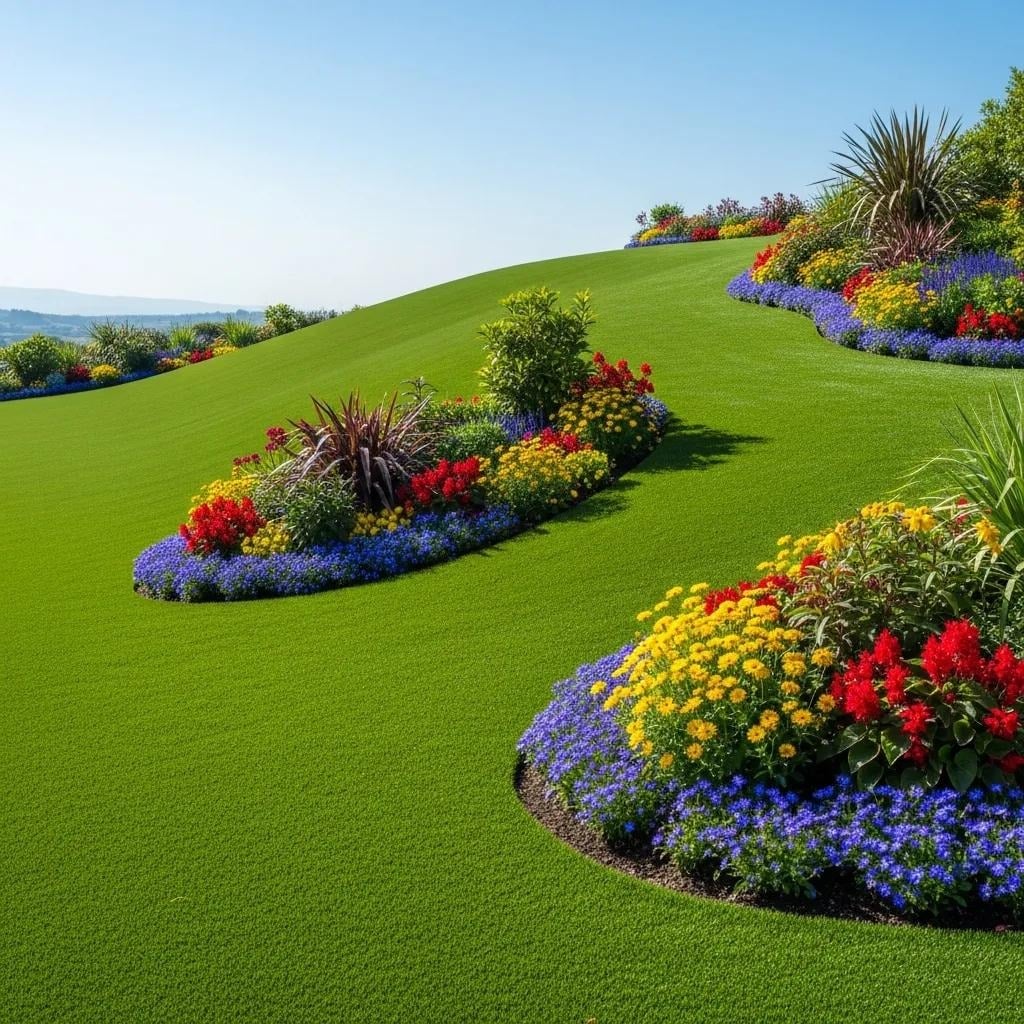
Hills and inclines bring extra headaches for natural grass: erosion, runoff, and more upkeep. This guide walks you through when and how artificial turf is a practical option for sloped landscapes — from the benefits to installation steps and simple maintenance tips. If you’ve battled muddy patches or thirsty irrigation on a slope, artificial turf can give you a green, low-maintenance yard without the usual hassle. Below, we cover the advantages, recommended products, site prep, installation, upkeep, and common homeowner questions about turf on slopes.
Why Choose Artificial Turf for Sloped Yards?
Artificial turf brings several clear advantages for sloped yards, making it a solid choice for homeowners who want a neat, reliable outdoor space.
- Erosion Control: Turf creates a stable surface that protects soil from washing away. Unlike real grass, synthetic turf won’t uproot during heavy rain, helping reduce erosion on inclines.
- Water Conservation: No regular watering is needed, which is especially useful where runoff is a concern. That saves water and eliminates the need for complicated slope irrigation.
- Aesthetic Appeal: With realistic colors and textures, artificial turf keeps a tidy, green look year-round without the patchiness or brown spots that can appear on steep slopes.
Those benefits make artificial turf a practical solution for sloped yards — it addresses common slope problems while improving curb appeal.
Studies also back up the idea that artificial materials can help prevent soil erosion on steep slopes, even under heavy rainfall.
Artificial Materials for Steep Slope Erosion Control
This study tests how different artificial coverings perform on steep slopes during heavy rain. Soil samples were placed on a 300 × 100 cm platform set at either 35° or 45°, then covered with various materials and exposed to 130 mm/h rainfall for one hour. A wooden-block net covered with a jute net showed the best resistance, reducing erosion by 83% at 35° and 76% at 45°. Results indicate that materials must attach well to the soil and have structural features—like high coverage and transverse elements—to slow runoff and trap soil effectively.
The efficiency of artificial materials used for erosion control on steep slopes, SC Chen, 2011
Benefits of Synthetic Grass on Slopes
Synthetic grass solves many slope-specific problems while staying low-effort. Here are the main advantages.
- Lower Maintenance: No mowing, fertilizing, or pest control. For steep areas that are hard to mow or maintain, that’s a big time-saver.
- Better Drainage: Many turf products include drainage holes so rainwater passes through instead of pooling, keeping the surface usable after storms.
- Safer Surface: Artificial turf provides a uniform, stable footing that reduces slips compared with wet, uneven natural grass — important for kids and pets on slopes.
Those points show why synthetic grass is an excellent option for inclined landscapes: it’s practical, safe, and low-maintenance.
Artificial Turf vs. Natural Grass on Inclines
Comparing the two highlights why many homeowners choose synthetic turf for slopes.
- Maintenance: Natural grass needs regular mowing, watering and fertilizing — tasks that are harder on a slope. Artificial turf needs only occasional cleaning and grooming.
- Durability: Turf stands up to weather and foot traffic and won’t wear into bare patches as easily as natural grass on steep or high-use areas.
- Long-Term Value: Installation costs are higher up front, but savings on water, lawn care, and repairs can make turf more cost-effective over time.
These differences make artificial turf particularly appealing where slopes create extra maintenance and erosion risks.
When weighing value, remember to include the initial cost of turf plus the sub-base preparation.
Synthetic Turf Sub-Base Costs
Reported costs for synthetic turf materials range from $1.40 to $2.30 per square foot. When you add a proper sub-base and installation, the total changes — especially for specialized areas like golf-course turf, where extra prep was used in case studies.
Next generation golf course: Lakeside Hills synthetic turf study, 2009
Which Artificial Turf Products Work Best on Sloped Landscapes?
What to look for in turf for hills and uneven ground
Choose turf with features that help it stay put, drain well, and look natural on an incline.
- Backing Material: A durable backing keeps the turf stable and reduces shifting or bunching on slopes.
- Pile Height: A moderate pile height gives a realistic look while holding up under foot traffic without matting down.
- Drainage: Reliable drainage holes or channels prevent water buildup and keep the surface usable after rain.
Those features are key when selecting turf that will perform well on sloped areas.
Recommended Artificial Turf Express products for slopes
- Evergreen Pro: Durable and lifelike — a strong choice for high-traffic slopes that need to look good year-round.
- Pet Turf: Built for pets with extra drainage and durability, so play areas on slopes stay clean and functional.
- Playground Turf: Engineered for safety and wear-resistance, a good option for family yards on inclines.
These products from Artificial Turf Express are practical options for homeowners planning turf installations on slopes.
How to Prepare a Sloped Landscape for Artificial Turf Installation
Proper preparation makes the installation last. Follow these core steps so the turf performs well on a slope.
Key steps for slope grading and sub-base preparation
- Assess the slope: Check steepness, soil condition, and any drainage patterns. This guides how much grading you’ll need to do and what materials you’ll need.
- Grade the slope: Use machinery or hand tools to create a smooth, even surface. Good grading helps prevent water pooling and directs runoff correctly.
- Install a sub-base: A compacted layer of crushed stone or gravel gives stability and encourages drainage. Make sure it’s level and firmly compacted before laying turf.
These preparation steps give your turf a solid foundation and improve long-term performance on an incline.
A properly graded sub-base is a basic requirement for most sloped landscape projects.
Graded Sub-Base for Sloping Landscapes
Whether at a sloped driveway, a stairway meeting a plaza, or a sloping landscape with paths or pads, preparing a graded sub-base is standard practice before installing surface materials.
Means Landscape Estimating Methods, 2007
How to manage drainage and erosion risks on slopes
- Install drainage solutions: Add French drains, perforated pipes, or other channels to move water away from the slope and reduce erosion.
- Use erosion-control fabrics: Placing geotextiles under the turf helps stabilize soil and keep it in place during heavy rain.
- Perform regular checks: After installation, inspect the area for signs of erosion or poor drainage and address issues quickly to protect the slope.
Addressing drainage and erosion from the start helps ensure your turf stays secure and attractive over time.
Step-by-Step: Installing Artificial Turf on a Slope
Measuring, cutting, and laying turf on inclined surfaces
- Measure the area: Take accurate measurements that account for slope length and width so pieces fit without excess seams.
- Cut the turf: Use a sharp utility knife to trim the turf to the measured shape, keeping the edges clean, so the seams meet precisely.
- Lay the turf: Start at the top of the slope and work downward. Laying top-to-bottom helps keep seams tight and prevents movement.
Following these steps helps the turf conform to the incline and reduces shifting during installation.
Best methods to seam and secure turf on hills
- Seaming techniques: Use professional-grade seam tape and adhesive to join edges for a smooth, durable finish—especially important on slopes.
- Securing methods: Anchor edges and seams with landscape staples or nails where appropriate, to prevent lift and movement.
- Common mistakes to avoid: Don’t over-stretch the turf — too much tension can cause buckling or seam failure as the turf settles.
Using the right seaming and anchoring methods keeps your installation secure and looking clean on a slope.
Applying and finishing infill on sloped areas
- Choose the right infill: Pick an infill like silica sand or rubber granules that matches the turf’s intended use and helps stabilize the surface.
- Apply infill evenly: Use a spreader to distribute infill so it settles into the blades and provides consistent support.
- Finish the surface: Brush the turf so the blades stand up, and the infill settles evenly, giving a natural, finished look.
Proper infill application improves stability and appearance, both important on inclines.
How to Maintain and Extend the Life of Artificial Turf on Slopes
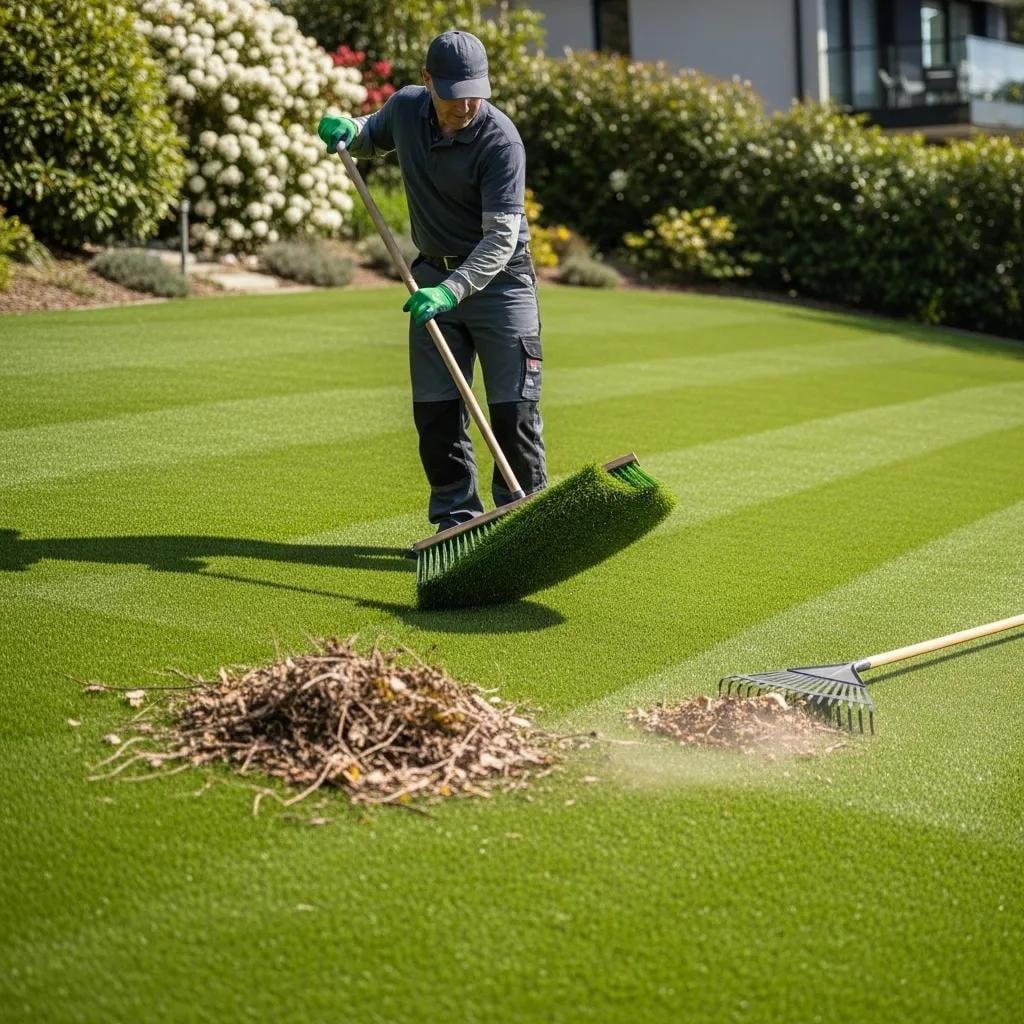
Maintenance for turf on slopes is straightforward if you follow a few routine steps to keep the surface functioning and looking its best.
Recommended cleaning and grooming practices
- Regular cleaning: Remove leaves, branches, and debris frequently so water can drain and the turf stays tidy.
- Grooming techniques: Use a stiff-bristled broom or turf rake to lift blades and redistribute infill, restoring a natural texture.
- Check for damage: Inspect seams, edges, and high-traffic areas and fix small issues before they grow.
These simple routines preserve the turf’s look and performance on slopes.
Managing shifting or settling over time
- Watch for movement: After storms or freeze-thaw cycles, look for any shifting or settling, especially at seams and edges.
- Re-secure loose areas: Use staples or adhesive to re-anchor sections that have lifted or moved.
- Fix settling issues: If areas settle, you can add infill or rework the sub-base locally to restore evenness.
Catching and fixing small shifts early keeps the installation stable and reduces the need for larger repairs.
Common Questions About Artificial Turf Installation on Slopes
Can Artificial Turf Be Installed on Steep Slopes?
Yes — turf can be installed on steep slopes, but success depends on planning and technique. Proper grading, good drainage, and secure attachment (seams, anchors, sub-base) are all essential for a stable installation.
How Do You Ensure Proper Drainage for Sloped Synthetic Grass?
Good drainage starts with grading and a permeable sub-base, plus drains or pipes where needed. Choosing turf with built-in drainage holes helps, too. Together, these measures move water away from the surface and prevent pooling.
What Tools and Accessories Are Needed for DIY Slope Installation?
- Measuring tools: Tape measure and level to take precise measurements.
- Cutting tools: A sharp utility knife for trimming turf to fit.
- Installation tools: Landscape staples, seam tape, and adhesive to secure edges and seams.
Those basic tools and supplies cover most DIY slope installations, though steep or complex sites may benefit from professional help.
Frequently Asked Questions
What is the lifespan of artificial turf on sloped landscapes?
Most artificial turf on slopes lasts about 15 to 25 years, depending on product quality and how well it’s maintained. Choosing a durable turf and keeping up with cleaning, grooming, and minor repairs will help you hit the upper end of that range.
How does the weather affect artificial turf on slopes?
Weather affects turf mainly through drainage and surface temperature. Heavy rain can cause pooling if drainage is insufficient; extreme heat can make the surface warm; snow and ice can create slippery conditions. Proper grading, drainage, and product selection help mitigate these issues.
Are there any environmental concerns with using artificial turf?
Artificial turf reduces water use and cuts the need for pesticides, but it’s made from synthetic materials that aren’t always biodegradable. Many manufacturers now offer options with recycled content, and some take-back programs exist for end-of-life recycling. Proper disposal and and choosing eco-friendlier products can reduce environmental impact.
Can artificial turf be recycled after its lifespan?
Yes — some turf types can be recycled, and several manufacturers run take-back or recycling programs. Old turf can also be repurposed for other surfaces. Check with your turf supplier or local recycling centers for available options.
What are the costs associated with installing artificial turf on slopes?
Installation costs vary by turf type, area size, and site complexity. On average, homeowners can expect roughly $ to $$ per square foot, including materials and labor. Extra costs may come from grading, drainage work, and sub-base preparation. Getting multiple quotes helps you compare value.
How can I enhance the safety of artificial turf on slopes?
For safer turf on slopes, choose products with shock-absorbing infill where needed, ensure proper drainage to avoid slippery spots, and keep the surface groomed. Adding edging or small barriers can also help contain the turf and reduce trip hazards.
Conclusion
Artificial turf is a reliable, low-maintenance option for sloped landscapes that helps control erosion, cut water use, and keep your yard looking great year-round. With the right product choices, proper site pre,p and correct installation techniques, a sloped yard can become both beautiful and functional. Explore our range of artificial turf options to find the best solution for your slope.


