


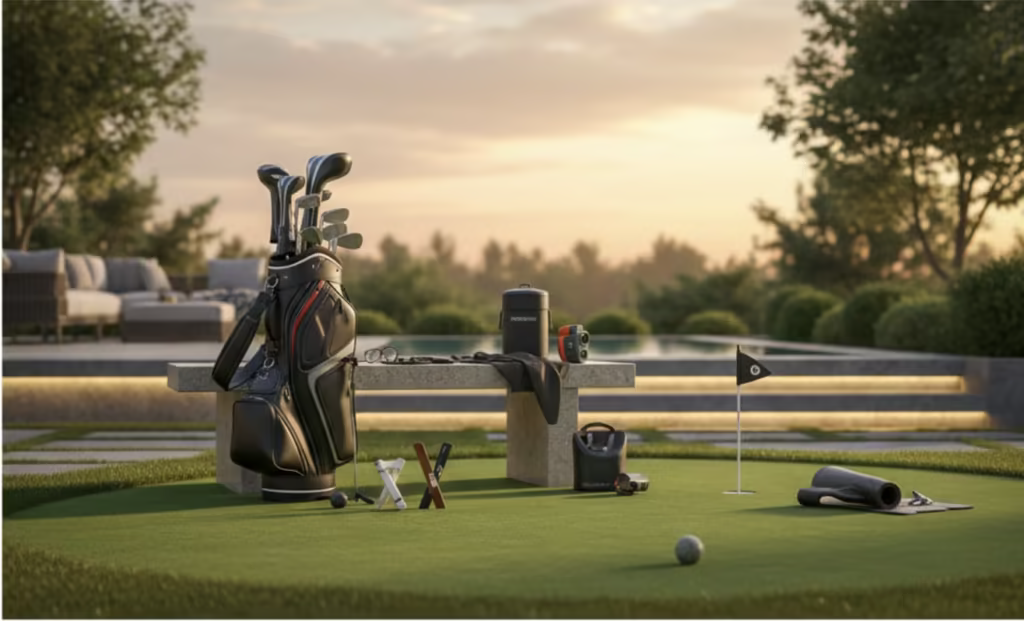
A well-equipped backyard putting green transforms occasional practice into structured improvement, social play, and low-maintenance enjoyment. This guide explains how backyard putting green accessories—from golf cups and ball return systems to lighting, maintenance tools, and smart add-ons—work together to improve practice efficiency, turf longevity, and aesthetics. Readers will learn which accessories are essential for everyday use, which training aids deliver measurable stroke improvements, how to maintain artificial grass putting green surfaces, and which lighting and comfort options extend usable hours and social appeal. Practical how-to steps, product-type comparisons, maintenance schedules, and eco-conscious choices are included to help you select accessories that match your goals, budget, and local climate. The article uses current research and best practices as of 06/2024 to recommend materials, placement, and training progressions that reliably improve putting consistency and green performance. Next we’ll identify the essential accessories that form the foundation of a productive backyard putting green.
What Are the Essential Accessories for a Backyard Putting Green?
Essential backyard putting green accessories create a functional surface, consistent targets, and efficient practice workflows while protecting the artificial turf. Core items include durable golf cups and flag assemblies that integrate with turf drainage, a ball return system that increases repetition, alignment aids that reinforce stroke geometry, and basic maintenance tools that preserve pile and infill. Each accessory plays a specific role: cups define hole location and putt depth, flags assist visual targeting and wind reading, ball returns multiply reps per minute, and turf tools keep the surface true and fast. Understanding these core pieces makes it easier to prioritize purchases based on practice goals and maintenance capacity, and it prepares you to add lighting and comfort accessories later. Below is a concise list of essentials to help you assess what your green needs first and why those items matter for playability and longevity.
- Golf cups and flags: Provide consistent hole size and visible targets for accurate practice.
- Ball return system: Speeds up repetition and reduces retrieval time between putts.
- Putting alignment mirror: Corrects setup and stroke path by showing body, eye, and putter alignment.
- Turf rake and broom: Maintain pile direction and redistribute infill to preserve roll characteristics.
- Hole reducers and putting gates: Allow progressive difficulty by narrowing target and improving precision.
These essentials balance playability and maintenance, and they set the stage for adding training aids and lighting that further boost practice effectiveness. The next section details golf cups and flags that best suit artificial putting greens.
Which Golf Cups and Flags Best Suit Artificial Putting Greens?
Golf cups and flags designed for artificial putting greens prioritize corrosion resistance, compatibility with turf thickness, and simple installation to protect the synthetic base and drainage layer. Plastic or ABS cups with smooth top edges reduce wear on the ball and turf, while metal-reinforced options offer longevity where winds or heavy use are concerns; the key is matching cup flange size to the turf’s thickness and the green’s sub-base. Flagsticks should be lightweight, have flexible break-away features for safety, and be visually contrasting with the turf color to aid aiming and wind reading during practice. For customizable visuals, vinyl or polyester flags that attach with corrosion-resistant fittings maintain appearance through UV exposure, and removable hole reducers let you tighten the target diameter gradually to improve precision. Choosing the right cup and flag setup improves ball drop consistency and minimizes edge wear, which in turn reduces maintenance frequency and preserves true roll characteristics for longer periods.
Introductory table summarizing essential accessory categories and best-use cases:
| Accessory Category | Key Feature | Best For |
|---|---|---|
| Golf Cup & Flag | UV-resistant materials and compatible flange size | Consistent hole definition and low-maintenance play |
| Ball Return System | Manual or gravity-fed mechanism | High-repetition practice and solo sessions |
| Alignment Aids | Visual guides for stance and putter path | Stroke consistency and eye-line correction |
| Turf Tools | Nylon bristles, non-metal edges | Maintaining pile direction and infill distribution |
This comparison clarifies how each category contributes to playability and maintenance, helping you prioritize purchases based on usage patterns and green design. Next we’ll look at how ball return systems specifically increase practice efficiency.
How Do Ball Return Systems Enhance Putting Practice Efficiency?
Ball return systems reduce downtime between strokes by returning balls to a convenient collection point, which increases practice volume and promotes focused repetition that improves muscle memory for stroke length and tempo. Gravity-fed chutes and passive cups are simple to install and require no power, channeling balls along a gentle slope back to a pocket or collection ramp, while automated or mechanized returns can route balls to multiple positions and often include adjustable return angles. The mechanism you choose depends on installation complexity, slope allowance on your green, and whether you prioritize silent operation or maximum throughput during drills. Frequent practice users typically see better ROI from a return system because more continuous repetitions accelerate skill acquisition and reduce time spent retrieving balls. Understanding how different return designs route forces and interact with surface grade helps you select a model that delivers consistent returns without damaging the turf or altering drainage.
How Can Training Aids Improve Your Golf Putting Skills at Home?
Training aids give immediate, objective feedback that helps golfers translate technical instruction into repeatable putting actions by isolating specific elements like alignment, stroke path, and distance control. Effective training aids include alignment mirrors that reveal eye position and shoulder orientation, putting gates that constrain the putter path and reward center strikes, hole reducers that narrow the target for precision practice, and tempo devices that encourage consistent stroke timing. Using these tools in structured drills turns practice into measurable progress: alignment drills build aim, gate progressions refine impact position, and distance ladders train speed control across varied lengths. When combined with timed sessions and deliberate practice routines, these aids accelerate improvements in consistency and confidence on the green. Below is a list of practical drills and training priorities to integrate these aids into a weekly practice plan.
- Mirror setup drill: Check eye position and shoulder line to ensure square alignment before every putt.
- Gate drill progression: Start with wider gates and narrow over time to reinforce a straight stroke path.
- Distance ladder: Putt from multiple distances to hone speed control and reduce three-putts.
- Hole reducer challenge: Reduce target size incrementally to improve accuracy under pressure.
These drills combine alignment, contact, and speed work into efficient sessions that maximize the benefit of each accessory. The next subsections explore alignment mirrors and gate/hole-reducer strategies in detail.
What Benefits Do Putting Alignment Mirrors Offer for Stroke Accuracy?
A putting alignment mirror provides immediate visual feedback about stance, eye position, shoulder alignment, and putter face angle, allowing golfers to correct systematic setup errors that cause misreads and inconsistent roll. The mirror’s markings and sight lines make it possible to self-diagnose common faults—such as an open putter face at impact or an off-center address position—so that focused repetitions reinforce correct geometry. Recommended drills include setting the mirror under the ball, aligning eyes over the top line, and practicing a short stroke until the putter face tracks parallel to the marked stroke line; repeat for 10–20 minutes per session to engrain motor patterns. Alignment mirrors come in varying sizes and materials; lightweight acrylic versions are portable for different surfaces, while larger mirrors offer more comprehensive visual cues for stance and body rotation. Consistent use of an alignment mirror reduces aim errors and streamlines the transition from practice to on-course putting, which leads into how gates and hole reducers build precision.
How Do Putting Gates and Hole Reducers Help Improve Precision?
Putting gates and hole reducers create a progressively challenging target environment that forces precise impact and control by narrowing the tolerated margin for error on each stroke, thereby improving accuracy and putting confidence. Gates set beside the ball encourage a straight-back-straight-through stroke and reward centered contact; players can decrease gate width over time to quantify improvement and track progress. Hole reducers simulate tournament-like conditions by reducing cup diameter, which compels players to fine-tune their aim and pace while maintaining realistic roll; pairing reducers with alignment aids magnifies training effectiveness by ensuring the narrowed target is approached with correct setup and path. Structured progression involves moving from wider gates and full-size cups to tighter gates and smaller hole reducers across multiple sessions, logging makes-to-attempts ratios to monitor development. Mastery of these constrained conditions transfers to improved normal play because the nervous system learns to control small variances in stroke mechanics under pressure.
What Are the Best Maintenance Tools for Artificial Turf Putting Greens?
Proper maintenance keeps artificial grass putting green surfaces performing predictably by preserving pile direction, managing infill distribution, removing debris, and preventing odor or biological growth. Essential artificial turf maintenance tools include a turf rake for infill redistribution, a stiff synthetic-bristle broom for pile grooming, lightweight blowers for debris removal, and safe cleaning solutions to disinfect without harming fibers or backing. Regular maintenance schedules—daily debris clearing, weekly brushing, monthly infill checks, and seasonal deep cleaning—safeguard surface speed and ball roll, while targeted repairs such as seam reinforcement prevent water pooling and edge lift. Investing in the right tools and a simple maintenance routine reduces long-term repair needs, improves surface consistency for practice, and preserves drainage performance during wet seasons. The following table compares common maintenance tools to help you match tools to tasks and usage frequency.
| Tool | Material / Feature | Recommended Frequency |
|---|---|---|
| Turf Rake | Nylon bristles, non-metal frame | Weekly to monthly for infill redistribution |
| Synthetic Broom | Stiff polypropylene bristles | Weekly for pile grooming and debris clearing |
| Leaf Blower | Variable speed, non-contact option | Daily to weekly for loose debris removal |
| Surface Cleaner | pH-neutral, turf-safe formula | Seasonal deep cleaning or stain removal |
This table helps you prioritize which tools to buy and how often to use them to maintain ideal putting surfaces. Next we’ll explain how turf rakes and brooms preserve artificial grass quality.
How Do Turf Rakes and Brooms Maintain Artificial Grass Quality?
Turf rakes and brooms maintain artificial grass quality by aligning synthetic fiber pile, redistributing infill material for even ball roll, and removing surface debris that can flatten fibers and impede drainage. Rakes with wide nylon tines lift compacted areas and move infill back into place without cutting fibers, while brooms with stiffer bristles realign pile direction to restore the surface’s visual and playing characteristics. Correct technique involves brushing in the against-grain direction periodically to lift fibers, then smoothing in the primary roll direction to create consistent ball roll, avoiding metal tines that can abrade backing and lead to premature wear. Frequency depends on usage intensity: high-traffic greens require weekly grooming while lightly used practice areas may be serviced monthly; always perform light touch-ups after heavy debris events like storms or leaf drop. Following these practices preserves putting speed and minimizes localized compaction that skews otherwise reliable green performance.
What Is the Role of Infill in Putting Green Performance and Longevity?
Infill for putting green surfaces mediates ball roll, shock absorption, pile support, and drainage; the selection and amount of infill determine green speed, responsiveness, and resistance to compaction over time. Common infill types include kiln-dried silica sand for firmness and ball roll control, crumb rubber for shock absorption, and emerging eco-infill blends that use recycled or engineered particles to balance drainage with environmental considerations; each material changes the surface’s interaction with the ball and foot traffic. Proper infill depth and distribution keep fibers upright and ensure consistent roll; periodic top-ups and redistribution—especially after heavy use or seasonal settling—prevent thin spots that produce unpredictable reads and excessive wear. Testing green speed with a calibrated stimpmeter and adjusting infill incrementally lets you dial in desired pace without overcompacting the surface, thereby extending turf life and reducing maintenance costs. Understanding infill tradeoffs helps you choose a performance profile that aligns with practice goals and local weather patterns.
Maintenance tasks list intro paragraph and summary follow-up.
- Daily debris removal: Clear leaves and organic matter to avoid fiber matting and bacterial buildup.
- Weekly brushing: Restore pile and redistribute infill to preserve consistent ball roll.
- Monthly inspection: Check seams, edges, and drainage paths for early repair needs.
- Seasonal deep clean: Use turf-safe cleaners to remove stains and neutralize odors during heavy-use periods.
Adopting these tasks into a calendar reduces the need for major repairs and maintains consistent green speed through changing conditions. The next section discusses how outdoor lighting extends green usability into evening hours.
How Does Outdoor Lighting Extend the Usability of Your Putting Green?
Outdoor lighting for putting greens extends usable hours, enhances safety, and creates ambiance for social practice or evening play, all while preserving surface visibility and minimizing glare that distorts read lines. Proper lighting balances lumen output and beam angle to uniformly illuminate the surface without casting harsh shadows near holes or creating reflective hotspots that confuse depth perception. Choices range from solar-powered LED landscape lights to low-voltage wired fixtures and adjustable floodlights; each option varies in runtime, installation complexity, and environmental impact, and the best selection aligns with your site’s power availability and desired light quality. Strategic fixture placement—offset from primary sight lines and aimed to wash the surface evenly—improves visual contrast and reduces glare problems during practice. Below is an EAV table comparing lighting types by runtime, brightness, installation complexity, and eco-impact to help you make an informed choice.
Lighting comparison table intro paragraph and summary:
| Lighting Type | Runtime / Brightness | Installation Complexity |
|---|---|---|
| Solar LED | 6–10 hours typical, moderate lumens | Low complexity, panel placement required |
| Low-voltage Wired LED | Unlimited runtime, high-quality lumens | Moderate complexity, trenching or conduit needed |
| Floodlight (Hardwired) | High lumens, targeted coverage | Higher complexity, professional mounting recommended |
This comparison highlights the tradeoffs between simplicity and performance, showing solar as the easiest to install and wired options as the highest performing for consistent brightness. Next we’ll detail fixture types and placement guidelines to achieve even illumination without glare.
What Types of Outdoor Lighting Are Ideal for Backyard Putting Greens?
Ideal outdoor lighting for putting greens combines diffuse area lighting with targeted hole illumination to preserve visual depth perception while preventing glare that alters reads and aim. Low-voltage LED fixtures produce consistent color temperature and controllable beam spreads for even surface coverage, while solar-powered LED stakes and bollards offer easy installation where wiring is impractical; floodlights provide higher lumen counts for larger areas but require careful aiming and shielding. Lumens requirements vary by purpose: practice-oriented greens need sufficient lux for surface texture visibility, typically achieved through multiple fixtures spaced to avoid deep shadows, whereas decorative accent lighting can be lower-intensity and placed to enhance landscape aesthetics. Weather ratings and IP classification are crucial—choose fixtures rated for outdoor exposure with corrosion-resistant finishes and secure mounts to withstand wind and moisture. Proper selection and positioning create usable light levels that replicate daytime read cues in the evening.
How Can Solar-Powered Lights Enhance Eco-Friendly Golf Practice?
Solar-powered lights for backyard putting greens offer an eco-friendly, low-maintenance way to extend practice time without trenching for power, using photovoltaic panels to charge batteries that run LED fixtures after dusk. The main benefits are reduced energy costs, simpler installation, and lower environmental impact; modern solar fixtures can provide 6–10 hours of runtime depending on panel size, battery capacity, and seasonal sun availability. Limitations include reduced runtime during cloudy periods or winter months, necessitating hybrid solutions or supplemental wired fixtures for consistent year-round use. Placement is critical: panels must receive unobstructed sun exposure for peak charging, and fixtures should be mounted to minimize shading by trees or structures. When combined with efficient LED arrays and smart timers, solar lighting supports sustainable evening practice while lowering operational complexity and ongoing energy expenses.
Which Aesthetic and Comfort Accessories Enhance the Backyard Putting Green Experience?
Aesthetic and comfort accessories make a backyard putting green inviting for both practice and social gatherings, blending function with style through custom flags, shade solutions, seating, and perimeter edging that complements landscape design. Visual upgrades like bespoke flag designs and decorative edging increase the green’s character and help players with visual targeting, while shade features—umbrellas, shade sails, or small pergolas—provide comfort on sunny days and protect fibers from prolonged UV exposure. Seating choices should balance durability and comfort, offering rest for observers and a staging area for equipment while positioned to avoid interfering with play. Thoughtful material selection for these accessories—weather-resistant fabrics, UV-stabilized plastics, and powder-coated metals—ensures long-term performance in outdoor conditions. Below are recommendations for aesthetic elements and comfort additions that raise the overall user experience without adding excessive maintenance burden.
Design and comfort accessory list intro paragraph and summary:
- Custom flags and banners: Add visual flair and better wind-read contrast without altering play.
- Shade sails or umbrellas: Provide protection from sun while preserving airflow and sightlines.
- Outdoor seating (benches or stools): Offer durable places for rest that avoid encroaching on the putting area.
- Perimeter edging and planters: Create a clean boundary and integrate the green into the landscape.
These accessories enhance social use and practice comfort while maintaining the green’s performance, and the next subsections explore flag customization and seating options in more detail.
How Do Custom Flags and Shade Solutions Improve Visual Appeal and Comfort?
Custom flags and shade solutions improve both the visual identity and usability of a putting green by offering team or homeowner personalization and by providing shelter that increases session duration during sunny weather. Flags can be designed with contrasting colors or logos that enhance sightlines and support aiming, and they are best produced from UV-stable fabrics with rust-resistant fittings to withstand seasonal weather exposure. Shade options include tensile shade sails that attach to nearby anchors, market umbrellas that are portable and adjustable, and lightweight pergolas that offer semi-permanent coverage; each choice affects wind resistance and installation complexity, so you should match the shade solution to local wind loads and site geometry. Properly integrated shade reduces player fatigue from sun exposure and can indirectly prolong turf life by limiting extreme UV exposure on fibers. Considering both aesthetics and function when choosing flags and shade ensures the green remains attractive and comfortable year-round.
What Seating Options Are Best for Outdoor Putting Green Areas?
Seating near a putting green should be durable, water-resistant, comfortable, and positioned to avoid obstructing practice trajectories while offering convenient storage or staging for balls and clubs. Benches with composite or treated hardwood slats provide a stable, low-maintenance option for multiple observers, while weatherproof stools and folding chairs offer flexible seating that can be moved out of play paths when practice intensifies. Materials like powder-coated aluminum, marine-grade plastics, and UV-stabilized fabrics resist corrosion and fading, helping seating maintain appearance with minimal upkeep. Consider ergonomics for players who watch and learn: back support and appropriate seat height allow observers to analyze stroke mechanics without standing for long periods. Thoughtful seating placement keeps the practice area clear and enhances the social aspect of an evening practice session or small backyard tournament.
How to Choose and Install Durable Accessories for Long-Lasting Putting Greens?
Choosing and installing durable accessories involves selecting materials and installation components that protect turf stability, maintain drainage, and resist weathering while minimizing long-term maintenance needs. Key decisions include sub-base compaction and grading to ensure drainage, durable edging and seam reinforcement to prevent turf lift, selecting corrosion- and UV-resistant materials, and choosing mounting and fastening systems that distribute loads without damaging the backing. Installation checklists should cover slope and drainage verification, edge restraint anchoring, and testing of accessory interactions—such as ensuring ball return chutes do not concentrate runoff or create a trip hazard. A modular approach to accessory installation—using removable flags, anchored shade, and non-invasive lighting when possible—allows upgrades without major rework. The following checklist highlights installation components and considerations critical to preserving turf integrity and accessory lifespan.
Installation components checklist intro paragraph and summary:
- Verify sub-base slope and compaction: Ensure a stable, permeable base with 1–2% slope for drainage.
- Install continuous edging: Use rigid edge restraints to prevent turf pull-up and maintain seam integrity.
- Select non-penetrating mounts when possible: Minimize damage to the turf backing and drainage layer.
- Test accessory drainage interactions: Confirm that returns, chutes, and fixtures do not trap water or debris.
Following this checklist reduces common installation errors and preserves the playing surface for many seasons. The next subsections cover drainage components and material selection strategies.
What Installation Components Ensure Proper Drainage and Turf Stability?
Proper drainage and turf stability rely on a well-engineered sub-base, continuous edging, and appropriate seam and anchoring techniques that prevent water pooling and turf movement under play. A common approach uses a compacted aggregate base with a permeable layer that directs water to drainage channels or outlets, combined with geotextile fabric where needed to separate soils and maintain permeability; these layers work together so surface water percolates rather than pools. Edge restraints—installed around the perimeter—lock the turf in place and prevent lateral movement; they should be compatible with the turf backing and fastened to a stable substrate to resist frost heave and foot traffic. Seaming tape and adhesive systems must be applied under correct tension to avoid raised seams that deflect the ball and catch debris. Paying close attention to these components during installation reduces long-term maintenance needs and preserves the green’s consistent roll and structural integrity.
How to Select Weather-Resistant Materials for Putting Green Accessories?
Selecting weather-resistant materials for putting green accessories focuses on UV stability, corrosion resistance, and mechanical durability to minimize degradation from sun, moisture, and temperature cycles. Plastics and composites formulated with UV inhibitors resist fiber embrittlement and fading, powder-coated or stainless-steel metals prevent rust in humid or coastal environments, and marine-grade fabrics withstand prolonged sun and moisture exposure without losing tensile strength. Consider serviceability: modular components and replaceable wear parts lengthen accessory life and simplify repairs without disrupting the turf. Maintenance practices—such as periodic cleaning of fasteners and reapplication of protective finishes—extend lifespan, but initial material choice strongly influences long-term performance. Choosing materials rated for exposure in your climate and verifying manufacturer weather ratings reduces premature failure and preserves accessory function across seasons.
Understanding the science behind material degradation, particularly from UV radiation, underscores the importance of selecting high-quality, stabilized materials for long-lasting outdoor accessories.
Protecting Artificial Turf from UV Degradation
The deleterious effects of solar ultraviolet (UV) radiation on construction materials, especially wood and plastics, and the consequent impacts on their useful lifetimes, are well documented in scientific literature. Any future increase in solar UV radiation and ambient temperature due to climate change will therefore shorten service lifetimes of materials, which will require higher levels of stabilisation or other interventions to maintain their lifetimes at the present levels.
Effects of UV radiation on natural and synthetic materials, KK Pandey, 2023
What Are the Latest Innovations in Smart and Eco-Friendly Putting Green Accessories?
Recent innovations in backyard putting green accessories emphasize smart control, automation, and eco-friendly materials that reduce energy use and environmental impact while enhancing user experience. Smart ball return systems integrate sensors and quiet motors to route balls automatically, improving practice flow with app-controlled settings for return speed and routing, and app-controlled lighting systems allow dimming, scheduling, and color temperature adjustments to match practice needs. On the sustainable side, manufacturers are developing recycled-content infill materials and bio-based polymers for flags and accessories that reduce carbon footprint while meeting performance expectations. These innovations let homeowners tailor the green’s functionality to modern living patterns—scheduling practice lights from a phone, or adjusting return systems to cycle balls for interval training. Below is a concise EAV table that outlines smart features and common eco-friendly material choices to help you evaluate new accessory offerings.
Smart and eco-feature comparison table intro paragraph and summary:
| Feature Category | Typical Component | Practical Benefit |
|---|---|---|
| Smart Return | Sensor + motorized chute | Automated repetition with adjustable pace |
| App-Controlled Lighting | Wi-Fi or Bluetooth-enabled LED arrays | Scheduled lighting and color/brightness control |
| Eco Infill | Recycled or engineered particles | Lower environmental impact with controlled drainage |
| Sustainable Materials | Recycled plastics, bio-polymers | Reduced embodied carbon and recyclable end-of-life |
This snapshot shows how smart controls and sustainable materials can be combined to create efficient, lower-impact backyard practice systems. Next we’ll explain how smart ball returns and app-controlled lighting operate and integrate.
How Do Smart Ball Return Systems and App-Controlled Lighting Work?
Smart ball return systems use proximity sensors, low-voltage motors, and simple logic controllers to detect incoming balls and transport them along a chute or conveyor to a user-friendly collection point, often allowing customization of return rate, routing, and collection location through a companion app. These systems typically integrate with app-controlled lighting that uses wireless protocols—such as Bluetooth or local Wi-Fi—to enable scheduling, brightness adjustments, and scene setting for practice sessions; combined, they create hands-off practice environments that maximize repetition while letting users control ambiance and energy use. Installation requires considering power access and protective routing to avoid interfering with turf drainage, and systems designed for backyard use emphasize low sound, simple maintenance, and safety cutoffs. The main advantage is seamless practice flow and minimal interruptions, which encourages longer, more frequent sessions and controlled training progressions.
What Eco-Friendly Materials Are Used in Modern Artificial Turf Accessories?
Eco-friendly putting green accessories increasingly employ recycled plastics for flags, recycled rubber or engineered mineral blends for infill, and bio-based polymers for mounting components to lower lifecycle environmental impact while retaining functional properties. Recycled-content composites can reach performance parity with virgin materials when properly formulated and stabilized for UV resistance, and engineered infill blends are designed to balance drainage, ball roll, and reduced heat retention compared with older crumb-rubber solutions. Sourcing accessories with transparent material disclosures and third-party sustainability labels helps verify claims and guides purchasing choices for environmentally conscious homeowners. While some tradeoffs in initial cost or availability may exist, the longer-term benefits include reduced embodied carbon and the potential for easier recycling or repurposing at end of life. Understanding these options helps you align accessory selection with personal sustainability goals without sacrificing play quality.
What Are Common FAQs About Backyard Putting Green Accessories?
Homeowners commonly ask how to clean and maintain artificial turf, which accessories most effectively solve inconsistent putting, and how to choose accessories that minimize maintenance while maximizing practice value. Clear maintenance protocols—daily debris removal, scheduled brushing, and periodic deep cleaning—address turf longevity and cleanliness, while pairing alignment tools with progressive gate drills typically reduces misreads and inconsistent stroke patterns. Troubleshooting frequently involves mapping observed putting faults to accessory interventions; for example, consistent pulls often trace to setup and are improved through alignment mirror work, whereas speed inconsistencies may indicate infill issues that require redistribution. Short, actionable answers help readers resolve common problems quickly and point them to deeper sections for complex repairs or upgrades. The following FAQs focus on cleaning and accessory-driven solutions for inconsistent putting.
How Do You Clean and Maintain Artificial Putting Green Turf Effectively?
Cleaning artificial putting green turf effectively starts with routine debris removal to prevent organic matter from matting fibers and fostering microbial growth, progressing to regular brushing to maintain pile direction, and periodic use of turf-safe cleaning agents for stain and odor control. Daily or as-needed leaf blowing removes loose debris, weekly brushing with a synthetic-bristle broom restores fiber uprightness, and monthly inspections catch seam issues and infill displacement early; for stubborn stains, pH-neutral cleaners that are designed for synthetic turf avoid damaging fibers or adhesive seams. For pet or odor concerns, enzymatic cleaners that are turf-safe break down organic residues without leaving residues that attract dirt. Avoid harsh solvents or petroleum-based cleaners, and always rinse treated areas thoroughly to ensure no residue remains. Establishing a simple schedule of these tasks reduces the need for intensive restoration and keeps green performance consistent.
What Accessories Help Solve Inconsistent Putting and Improve Accuracy?
Accessories that directly address inconsistent putting include putting alignment mirrors to correct aim and eye position, putting gates to constrain and train stroke path, hole reducers to sharpen precision under pressure, and ball return systems to increase repetition for motor learning. Mapping problems to tools is straightforward: aim errors are often corrected by alignment drills using mirrors, stroke-path deviations respond to gate work, and distance control benefits from ladder drills with measured increments; combining these tools in a structured practice sequence accelerates measurable improvement. A recommended progression is to begin with alignment practice, move to gate drills for stroke path, and finish with reduced hole drills to train accuracy under tightened tolerances. When inconsistencies persist despite focused training, consider a short session with a teaching professional to verify that accessory-driven practice is being applied correctly.
Practice improvement list intro paragraph and summary:
- Check alignment first: Use an alignment mirror to correct consistent misses before changing stroke mechanics.
- Introduce gates second: Narrow the gate progressively to enforce a reliable stroke path.
- Focus on speed control: Use distance ladder drills to calibrate tempo across multiple lengths.
- Increase repetition with returns: Add a ball return system to multiply practice attempts and strengthen muscle memory.
These steps create a logical progression that turns accessory use into measurable gains on the green. If you’re considering installing a backyard putting green or want expert guidance on materials, design, and installation, our team is here to help. From selecting the right turf to ensuring long-term performance, we’ll walk you through every step of the process.
Contact Artificial Turf Express today to get personalized recommendations and start planning a putting green that fits your space, budget, and playing goals.


