


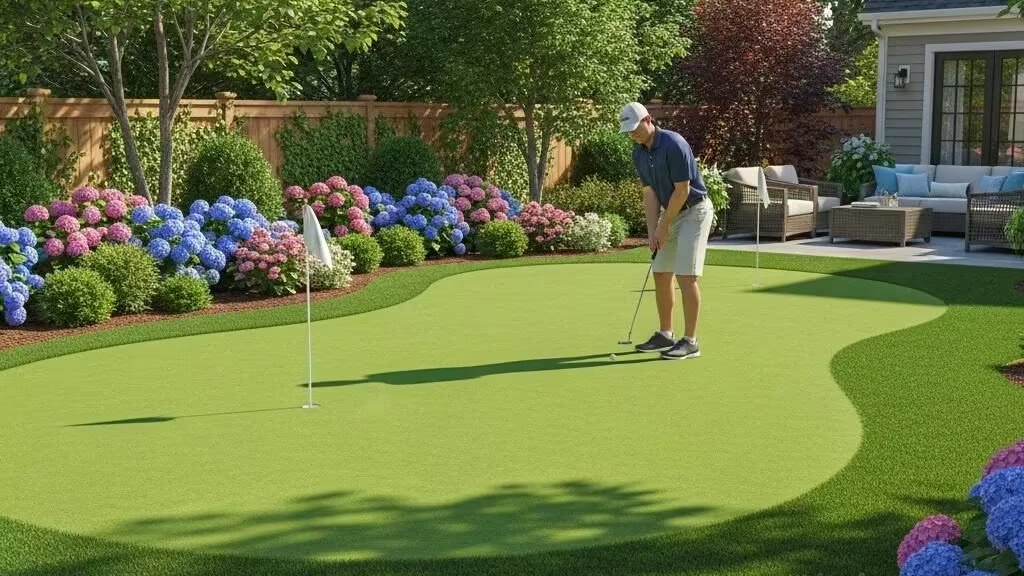
Choosing between an artificial turf putting green and a natural grass green comes down to what you want from your backyard: low upkeep and steady ball roll, or an authentic, living surface. This guide walks through materials, playability, maintenance, cost, environmental trade-offs, and local installation factors so you can pick the right fit. You’ll see how synthetic systems keep roll consistent with minimal care, why real grass still appeals to purists, and how drainage and site prep shape long‑term performance. We also cover product recommendations for San Jose homeowners, DIY versus pro installs, and how accessories and turf grade change the practice experience. Expect clear checklists, side‑by‑side comparisons, and practical guidance to match a putting green to your budget, time, and goals.
What Are the Key Differences Between Artificial Turf and Natural Grass Putting Greens?
Artificial putting greens are manufactured surfaces—yarns, backing, and engineered infill—designed for consistent pile, drainage, and ball roll. Natural greens are living turf made from specialized grass varieties that need ongoing cultural care. Synthetic surfaces achieve repeatable play through controlled pile geometry and infill; live greens rely on mowing, rolling, irrigation, and other cultural practices to tune speed and feel. Homeowners balance maintenance time and cost, durability, water use, and how “authentic” the surface should feel. Knowing these trade‑offs helps you choose the solution that matches your priorities and local climate.
Use the table below to compare maintenance, playability, cost, environmental impact, and longevity at a glance.
| Characteristic | Artificial Turf Putting Green | Natural Grass Putting Green |
|---|---|---|
| Maintenance | Brushing, infill checks, occasional cleaning | Regular mowing, watering, fertilizing, aeration |
| Playability | Consistent ball roll year-year | Play varies with season and turf health |
| Water Use | Minimal irrigation (mainly cleaning or cooling) | Substantial watering for peak performance |
| Durability | Durable fibers — typically 10–15 years | Needs renovation cycles and patching over time |
| Upfront Cost | Moderate to high depending on base prep | Initial planting varies; ongoing operating costs can be higher |
This quick comparison highlights strengths and limitations so you can focus on the sections that matter most for your situation.
How do artificial turf putting greens provide consistent gameplay year-round?
Synthetic greens deliver steady play because pile height, yarn type, fiber density, and infill are engineered to hold a uniform geometry. That predictable surface behavior controls ball speed and direction. A proper backing and drainage layer prevent settling after rain, and UV‑stabilized fibers resist compaction and fading so responsiveness holds up over time. In short, artificial greens let you practice the same putts through droughts, heavy use, or seasonal swings—without the variability living turf often shows.
What maintenance demands distinguish natural grass putting greens?
Natural greens need regular, skilled care to stay consistent: frequent mowing and rolling to set speed, careful irrigation and fertilization, aeration and topdressing to manage compaction, plus pest and disease monitoring. Those cultural practices tune performance but require time, seasonal budgets, and occasional downtime for renovation. If you want high‑fidelity live turf, expect ongoing labor and recurring costs to keep the surface at peak condition.
Research highlights how specific maintenance practices directly influence the playability and longevity of natural grass putting greens.
Bermudagrass Putting Green Performance & Cultural Practices
Study examining how cultural practices affect playing characteristics of USGA ultradwarf bermudagrass putting greens (2009). Findings stress the role of mowing, irrigation, and aeration in maintaining surface speed and smoothness.
What Are the Benefits and Considerations of Choosing Artificial Turf Putting Greens?
Artificial putting greens give you reliable, low‑maintenance practice areas, save water, and resist seasonal swings—great for homeowners who want consistent practice without a big time commitment. Synthetic systems cut recurring costs for mowing, irrigation, and chemicals and use durable fibers built for repeated foot and ball traffic. Trade‑offs include higher initial installation and base‑prep costs, potential for higher surface temperatures in full sun, and considerations about material lifecycle and recycling. Knowing these pros and cons helps you pick the right turf and infill for your climate and use.
Artificial turf cuts water use and labor while still delivering predictable play. Our product pages show how different grades map to performance and longevity for San Jose homeowners.
Key benefits and practical considerations for synthetic putting greens.
- Consistent play: Engineered pile and infill deliver repeatable ball roll regardless of season.
- Low maintenance: No mowing—routine care is mostly brushing and occasional cleaning.
- Water savings: Far less irrigation than live greens; occasional watering mainly for cooling or cleaning.
- Durability: Traffic‑resistant materials typically last 10–15 years with proper installation and care.
And a short list of considerations to evaluate before choosing synthetic turf.
- Upfront cost: Site prep and installation vary by complexity and drive price.
- Surface heat: Synthetic turf can get hot in direct sun; mitigation options exist.
- Material lifecycle: Think about end‑of‑life recycling and environmental trade‑offs.
- Infill choices: Infill affects cooling, feel, and maintenance needs.
Next, we’ll explain how artificial turf reduces water and upkeep costs in everyday use.
How does artificial turf save water and reduce upkeep costs at home?
Artificial turf saves water because it removes the need for routine irrigation that living greens require—an important advantage in drought‑prone areas or where water use is restricted. You’ll also cut time and expense on mowing, fertilizing, and pesticide applications, along with equipment and fuel costs. That means less yard work, fewer seasonal surprises, and a more predictable annual budget for your practice area.
What are the upfront costs and heat retention concerns of synthetic putting greens?
Installation costs are driven by site prep—grading, crushed base material, compaction—plus turf grade, infill, drainage, and labor. Base work and drainage are often the biggest cost factors, not just the turf itself. Synthetic surfaces can absorb and radiate heat; common mitigations include cooling infill, lighter yarn colors, shade structures, or occasional misting. Over time, the maintenance savings can offset the initial investment, but surface heat is an important consideration for hot, sun‑exposed sites.
Why Might Homeowners Prefer Natural Grass Putting Greens Despite Higher Maintenance?
Many homeowners still choose natural grass for its authentic feel, classic look, and the way it blends into a living landscape. Real turf offers a sensory experience—soft underfoot, subtle ball reactions, seasonal color changes—that’s hard to duplicate with synthetics. If you value that on‑course feedback and are willing to invest in maintenance or hire professionals, a natural green can be the right choice for a high‑fidelity practice area.
What authentic feel and aesthetics do natural grass putting greens offer?
Natural turf bends, compresses, and recovers in ways synthetic fibers can’t, producing nuanced roll and spin many players prefer. The color depth, seasonal growth, and integration with surrounding plantings give a traditional, lived‑in look that’s visually pleasing. For golfers seeking the closest match to course conditions, a well‑maintained natural green often delivers unmatched sensory detail.
How do weather and pest vulnerabilities impact natural grass greens?
Natural greens are vulnerable to drought, heavy rain, pests, and disease, which can create uneven surfaces, brown patches, or repair downtime. Managing these risks needs adaptive irrigation, pest control, and contingency plans for reseeding or topdressing—adding both complexity and cost. In climates with big seasonal swings or water restrictions, keeping a natural green healthy can be especially demanding.
How Do Installation Options and Costs Compare for Artificial Turf vs Natural Grass Putting Greens?
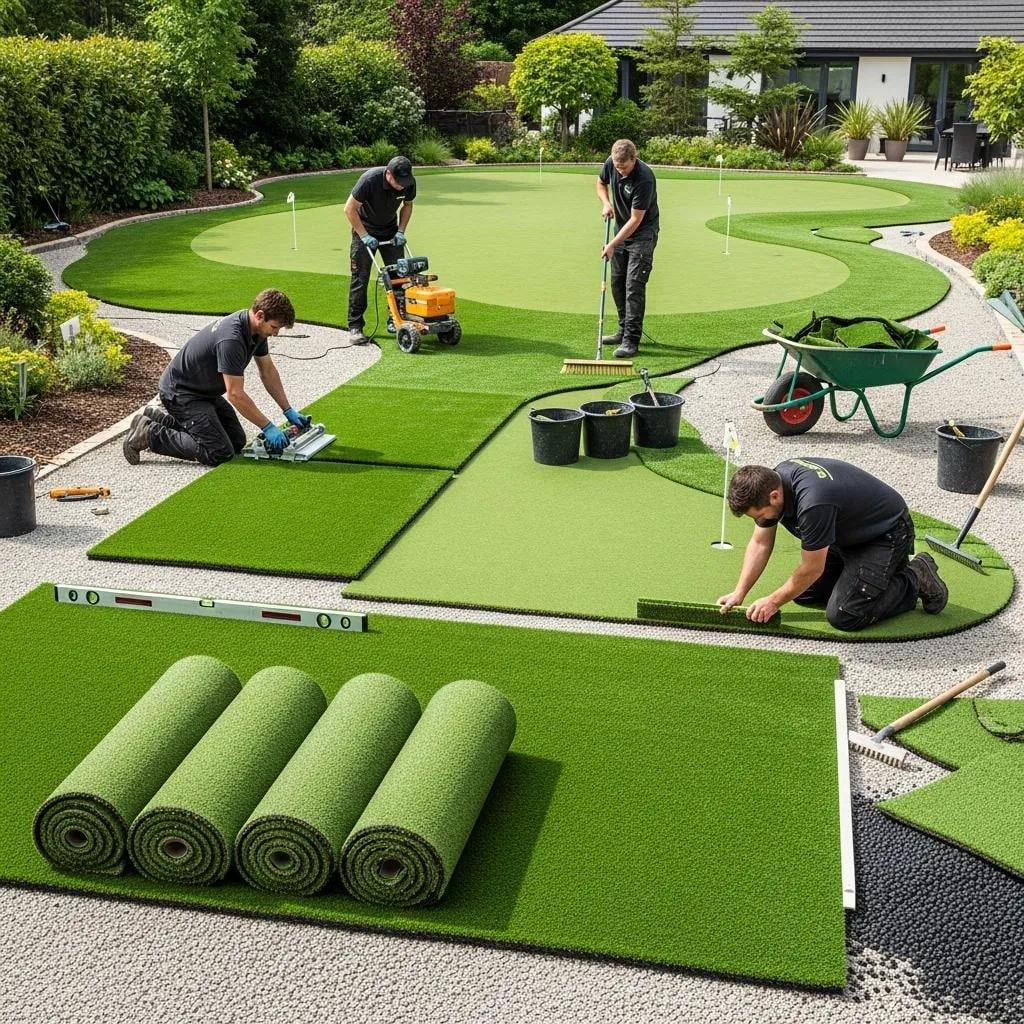
Both types start with a site assessment, grading, and drainage plan, but timelines and materials differ. Artificial installations focus on a stable, permeable base, precise leveling, and tight seaming for consistent roll. Natural greens need soil prep, irrigation systems, and time to establish turf. Decide whether you’ll DIY, hire pros, and how fast you want a playable surface—those choices strongly affect cost and outcome.
Compare DIY and professional options and remember that base prep and drainage determine long‑term performance more than the surface alone.
| Installation Type | Cost Consideration | Typical Time & Skill Required |
|---|---|---|
| DIY Artificial Turf | Lower labor costs; needs tools and time | Days to a couple of weeks; requires compaction and seaming skills |
| Professional Artificial Turf | Higher upfront cost; usually includes warranty and precise grading | 1–5 days for a typical backyard green with an experienced crew |
| Natural Grass Installation | Initial planting plus ongoing irrigation and establishment expenses | Weeks to establish; horticultural skill required for long-term care |
This table outlines expected commitments for each route. Below we break down DIY vs pro choices and why site prep matters.
What are the DIY and professional installation choices for artificial turf putting greens?
DIY works on simple, flat sites if you’re comfortable with compaction tools, cutting turf, and adding drainage: measure, remove existing surface, compact a crushed‑rock base, install turf, add infill, and finish seams. For complex slopes, drainage challenges, or when you want a warranty and precise surface speed, professional installers are recommended—they bring specialized equipment and experience to calibrate the green. DIY saves money up front but raises the risk of long‑term issues like settling; pros reduce that risk and speed up the timeline.
Artificial Turf Express stocks in‑grade putting green turf and offers local pickup and delivery in San Jose, supporting both DIY customers and professional installers with product availability and advice. Their local presence helps you choose whether a DIY approach fits your site or if pro installation will deliver better longevity and warranty coverage.
How do site preparation and drainage affect installation outcomes?
A stable, well‑draining base is the foundation of a long‑lasting green. Proper compaction, consistent slope for runoff, and an engineered drainage layer prevent soft spots, standing water, and uneven ball roll. Poor prep often results in sinking, inconsistent speed, and faster wear; good grading and sub‑base composition protect play characteristics and lower future maintenance. Set a uniform grade, verify compaction, and design perimeter drainage to channel water away from the surface to avoid headaches later.
Which Artificial Turf Products Best Suit Home Putting Greens in San Jose?
Pick a turf grade and accessory package that match your goals—Birdie Putt and Eagle Putt represent two common approaches: one aimed at approachable performance and value, the other geared to a faster, more consistent roll. Consider pile height, fiber density, backing and drainage, and recommended infill—those factors shape ball roll, speed, and upkeep. Use the short product matrix below to compare attributes and match a product to your intended use and budget.
Quick product matrix to help San Jose homeowners choose a putting green turf.
| Product | Pile Height & Density | Drainage & Intended Use |
|---|---|---|
| Birdie Putt | Medium pile, moderate density | Great for casual practice and family use |
| Eagle Putt | Lower pile, higher density | Professional feel for consistent ball roll |
| Accessory Pairings | Fringe, cups, chipping pads | Completes practice setups and improves realism |
Use this matrix to match specs to your needs. The next sections expand on differences and accessories.
What features distinguish Birdie Putt and Eagle Putt synthetic turf options?
Birdie Putt has a medium pile and balanced density for good practice value—ideal for family yards and casual players. Eagle Putt uses tighter fiber spacing and a lower, denser pile to mimic faster, more consistent roll that serious players prefer. Backing quality, drainage rate, and fiber composition all affect how the turf performs under repeated use—choose based on desired speed, budget, and traffic.
How do accessories enhance the artificial putting green experience?
Accessories—cups, flags, fringe strips, chipping pads, and training aids—add realism and expand practice options. Fringe and chipping zones create realistic transition areas, while alignment rails and slope trainers help you work on technique and reads. The right accessories tailored to your practice goals make the green more useful and fun.
How Can Homeowners Decide Between Artificial Turf and Natural Grass for Their Putting Green?
Deciding comes down to budget, maintenance tolerance, desired play quality, environmental priorities, and how quickly you want to use the green. Here’s a simple checklist: if low maintenance and consistent year‑round play matter most, synthetic turf is usually the better fit; if you want the authentic feel of live turf and can commit to regular care, natural grass may be the way to go. Use the checklist and personas below to make a practical choice.
Follow this checklist to align your priorities with the right green for your backyard.
- Budget and timeline: Choose higher upfront cost for synthetic turf or ongoing operating costs for natural grass.
- Maintenance tolerance: Opt for natural grass only if you accept seasonal, hands‑on care.
- Desired play quality: Pick Eagle Putt‑style turf for serious practice; Birdie Putt for casual play.
- Environmental priorities: Factor in water savings and lifecycle implications.
This checklist narrows choices and points to next steps like consulting a local supplier or installer for a site‑specific estimate. The sections below describe homeowner personas and environmental trade‑offs to help finalize your choice.
What factors should influence the choice based on budget, maintenance, and play style?
Match your choice to a homeowner persona: budget‑minded owners who want low upkeep often choose Birdie Putt or similar mid‑grade turf for consistent play at modest cost; busy families and low‑maintenance seekers favor synthetic turf to save time and water; serious golfers or traditionalists who prioritize an authentic feel may invest in natural grass and professional maintenance. Local climate, sunlight, and HOA or municipal water rules also affect lifecycle costs and feasible solutions—consider all these elements together for the best long‑term fit.
How does water conservation and environmental impact affect decision-making?
Water conservation strongly favors artificial turf, especially in drought‑prone areas or where irrigation limits exist, because synthetic surfaces remove routine watering and reduce chemical inputs. But weigh that against embodied energy in plastics and end‑of‑life recycling challenges. Balancing near‑term conservation benefits with long‑term material lifecycle considerations gives a fuller environmental picture when choosing a putting green.
When you’re ready to move forward, Artificial Turf Express offers local San Jose support: in‑stock products for pickup or delivery, turf options for different play levels (including Birdie Putt and Eagle Putt), and guidance for DIY or professional installs. Book an in‑person consultation or showroom visit to review samples, confirm site recommendations, and get a tailored estimate for your desired performance and budget.
Frequently Asked Questions
What are the long-term cost implications of maintaining natural grass putting greens?
Natural grass can carry significant long‑term costs: ongoing mowing, watering, fertilization, pest control, and periodic renovations or repairs. These expenses vary with weather and turf health. Artificial turf usually has a higher initial cost but lower predictable maintenance expenses over time, making it a steadier long‑term investment for many homeowners.
How does climate affect the choice between artificial turf and natural grass?
Climate is a major factor. In areas with extreme heat, drought, or heavy rain, artificial turf provides a reliable, low‑maintenance surface. Natural grass can perform well in temperate climates but demands careful management through seasonal changes. Check local water availability and temperature extremes when deciding which surface fits your maintenance capacity and play expectations.
Can artificial turf be recycled, and what are the environmental considerations?
Recycling artificial turf is possible but can be complex because of mixed materials. Some manufacturers and programs accept used turf for repurposing. Consider production energy, transportation, and disposal alongside reduced water use and fewer chemical inputs. Weigh these factors against your sustainability priorities when choosing turf.
What are the best practices for installing artificial turf to ensure longevity?
Good installation is critical. Best practices include building a stable, well‑draining base, confirming proper compaction, using quality turf and infill, and ensuring accurate seaming. Professional installation is recommended for tricky sites to avoid settling issues. Regular maintenance—brushing fibers upright and clearing debris—keeps the surface performing and extends its life.
How do local regulations impact the installation of putting greens?
Local rules can affect putting green installations—water use restrictions, landscaping codes, and HOA guidelines may limit materials or irrigation. Check with municipal authorities and HOA rules before you start. Compliance avoids fines and ensures your green fits community and environmental standards.
What role do accessories play in enhancing the putting green experience?
Accessories add utility and realism. Cups, flags, fringe, chipping pads, and training aids expand practice options and simulate on‑course conditions. Choose accessories that match your practice goals—short game, approach shots, or alignment drills—to get the most from your green.
Conclusion
Your best choice depends on lifestyle and priorities. Artificial turf offers low maintenance, consistent play, and water savings—ideal for busy homeowners—while natural grass appeals to those seeking an authentic, living surface and who are willing to maintain it. With the right information you can make a decision that fits your budget and time. For personalized advice and local product options, reach out to us to explore the best solution for your backyard putting green.


