

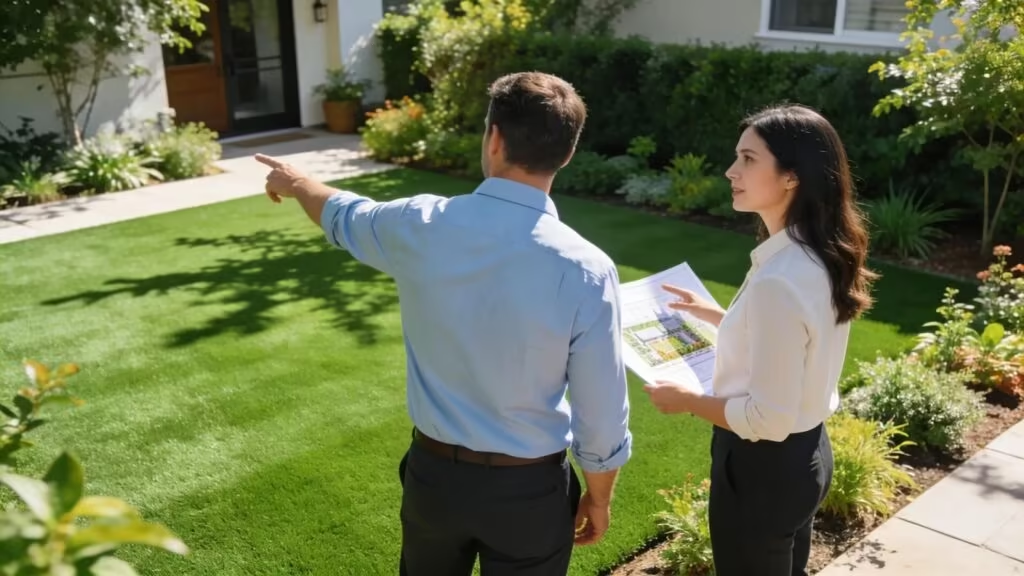
Artificial turf can reduce landscaping overhead and streamline operations for commercial properties. This article breaks down ROI drivers: installation and material costs, ongoing maintenance differences, and sustainability impacts. Property managers often weigh higher initial installation costs against long-term savings. By examining installation inputs, maintenance schedules, ROI calculation methods, and case studies, you can assess how turf affects your property value and operating budget. For a wide selection of high-quality options, consider exploring artificial turf products.
What Are the Key Cost Components of Commercial Artificial Turf Installation?
Installation costs break down into three primary areas: material selection, installation method, and required equipment or supplies. Each factor influences both upfront expense and lifecycle performance. Accurate budgeting requires comparing material grades, installation complexity, and the extra components needed for a durable system.
| Cost Component | Description |
|---|---|
| Material Costs | Quality varies between budget and premium options |
| Labor Costs | Varies based on project complexity and region |
| Installation Supplies | Includes infill, edging, and joining materials |
Understanding this cost breakdown lets you compare system options and predict total project spend when converting from natural grass to synthetic surfaces.
How Do Product Quality and Material Grade Affect Installation Costs?
Product grade drives both initial price and lifecycle cost. Higher-grade fibers and backing systems increase upfront cost but typically extend service life and resist wear, lowering replacement and repair frequency. Lower-grade products can reduce initial spend yet raise long-term maintenance and replacement liability.
What Installation Supplies and Labor Expenses Should Property Managers Expect?
Expect line items for infill, adhesives, edging, seam tape, and sub-base work in addition to labor. Labor rates depend on site access, grading needs, and regional wages. Budgeting for these items prevents scope creep and ensures the installation meets performance specifications.
How Does Commercial Artificial Turf Maintenance Cost Compare to Natural Grass?
Artificial turf eliminates recurring tasks such as irrigation, mowing, and fertilizing, reducing annual maintenance spending and resource use compared with natural turf.
What Are the Typical Maintenance Tasks and Frequencies for Artificial Turf?
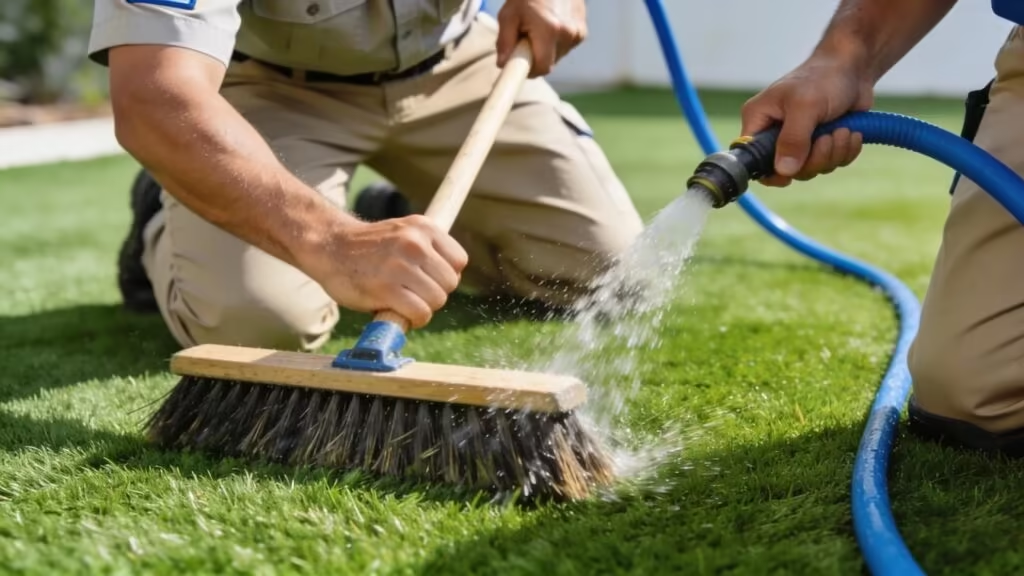
Although maintenance needs are lower, scheduled care preserves performance. Common tasks include brushing to realign fibers, rinsing to remove dust and salts, and periodic infill top-up to retain cushioning and stability.
- Brushing: Keeps turf fibers upright and free of debris.
- Rinsing: Flushes out dirt and enhances appearance.
- Infill Replacement: Ensures even distribution for cushioning and stability.
These routine actions demand less labor and fewer inputs than the intensive regime required for healthy natural grass.
How Much Can Property Managers Save in Maintenance Over Turf Lifecycle?
Over its service life, synthetic turf can yield notable savings when you compare irrigation, mowing, and chemical programs to the lower upkeep of artificial systems. Typical annual maintenance reductions of around 50% have been observed in some installations.
Assess whole-life costs for both systems to quantify total savings and payback timing for your site.
Artificial Turf vs. Natural Turf: Whole-Life Cost Comparison
To further compare the ‘real’ costs of artificial turf pitch systems to natural turf, the ‘whole-life’ costs of construction and maintenance need to be collated and evaluated.
One such Maintenance best practice and recent research, P Fleming, 2011
How Can Property Managers Calculate ROI for Artificial Turf Investments?
Calculate ROI by combining initial installation costs, ongoing maintenance savings, and any incremental property value or operational benefits. This multi-factor approach produces a realistic payback timeline.
What Formulas and Metrics Are Used to Assess the ROI of Artificial Turf?
ROI calculations typically use upfront cost, recurring expense differentials, and expected lifespan to determine returns. A simplified formula for ROI is:
Applying this formula helps you forecast the payback period and compare alternative specifications on a common financial basis.
Are There Available ROI Calculators or Tools for Commercial Turf Projects?
Several online ROI calculators are designed for turf projects; they consolidate installation costs, projected savings, and value impacts to estimate payback. For tailored analysis and technical guidance, contact Artificial Turf Express.
What Are the Durability and Sustainability Benefits Impacting Artificial Turf ROI?
Commercial-grade artificial turf is engineered for prolonged use and, with proper maintenance, commonly exceeds a decade of service. Longer service life reduces replacement frequency and supports positive ROI.
How Does Turf Durability Affect Long-Term Cost-Efficiency?
Durability directly reduces lifecycle costs: robust pile fibers, UV-stable coatings, and resilient backing systems limit wear and delay replacement. Selecting materials with proven wear metrics improves long-term cost-efficiency.
What Sustainability Factors Enhance Value for Commercial Property Landscaping?
Artificial turf conserves water and removes the need for fertilizers and pesticides, reducing chemical inputs and irrigation demand. These sustainability gains can support operational targets and regulatory compliance for commercial sites.
Which Case Studies and Real-World Examples Demonstrate ROI for Commercial Turf?
Documented case studies show how different property types achieve savings and operational benefits after installing commercial turf. Reviewing these examples helps set realistic expectations for similar projects.
What Are the Typical ROI Periods Observed in Commercial Turf Installations?
Observed payback periods typically fall between three and eight years, depending on installation cost, maintenance savings, and local operating conditions.
How Have Property Managers Realized Cost Savings through Turf Projects?
Some properties report annual operational savings—often through reduced water use and lower maintenance labor—illustrating a measurable return on investment after installation.
What Are Common Property Manager Questions and Concerns About Commercial Artificial Turf ROI?
Property managers commonly ask about per-square-foot pricing, expected payback timelines, maintenance requirements, and insurance or certification impacts before committing to turf installations.
How Much Does Commercial Artificial Turf Cost Per Square Foot?
Market pricing varies by product specification and installation complexity, with typical ranges from $2 to $10 per square foot depending on material grade and site requirements.
What Is the Typical Payback Period for Turf Investment?
Payback usually occurs within three to eight years, driven by maintenance reductions, water savings, and the product’s durability. For an end-to-end overview of commercial landscaping options, explore artificial turf.
Frequently Asked Questions
What types of commercial properties benefit most from artificial turf?
Properties with high foot traffic—sports venues, parks, schools, and retail courtyards—benefit most from turf for its wear resistance and consistent appearance. Sites in water-restricted regions or under strict landscaping rules also benefit from lower irrigation needs and reduced maintenance complexity.
Can artificial turf installations qualify for environmental certifications?
Artificial turf can support environmental certification goals, including LEED criteria, by reducing potable water use and pesticide and fertilizer inputs. Managers should review certification criteria and supplier documentation to confirm compliance for their projects.
What are the installation timeframes for artificial turf projects?
Timelines depend on project scale and site preparation. Small installations often complete in one to three days; larger projects may take a week or more. Weather, grading, and material lead times will affect the schedule, so coordinate closely with installers to minimize disruption.
Is artificial turf suitable for all climates?
Turf systems perform across a broad range of climates but require specification adjustments. In hot regions, appropriate infill and cooling options reduce surface heat. In cold areas, engineered drainage prevents ice-related issues. Consult manufacturers for climate-specific recommendations.
What are the implications of using artificial turf on property insurance?
Artificial turf can influence insurance assessments; insurers may view lower maintenance and reduced landscaping risk positively. Discuss installation plans with your provider to determine any premium or coverage adjustments.
How can property managers ensure proper maintenance of artificial turf?
Establish a maintenance schedule that includes routine brushing, periodic rinsing, infill monitoring, and inspections for damage. For larger sites, contract professional maintenance services to ensure performance and extend service life.
Conclusion
Commercial artificial turf can cut recurring maintenance costs, improve landscape consistency, and support water-conservation goals. When you match product specifications to site demands and follow a defined maintenance plan, turf can enhance property value and operational efficiency. Consult technical experts to quantify benefits for your site and review product options tailored to your needs.
