


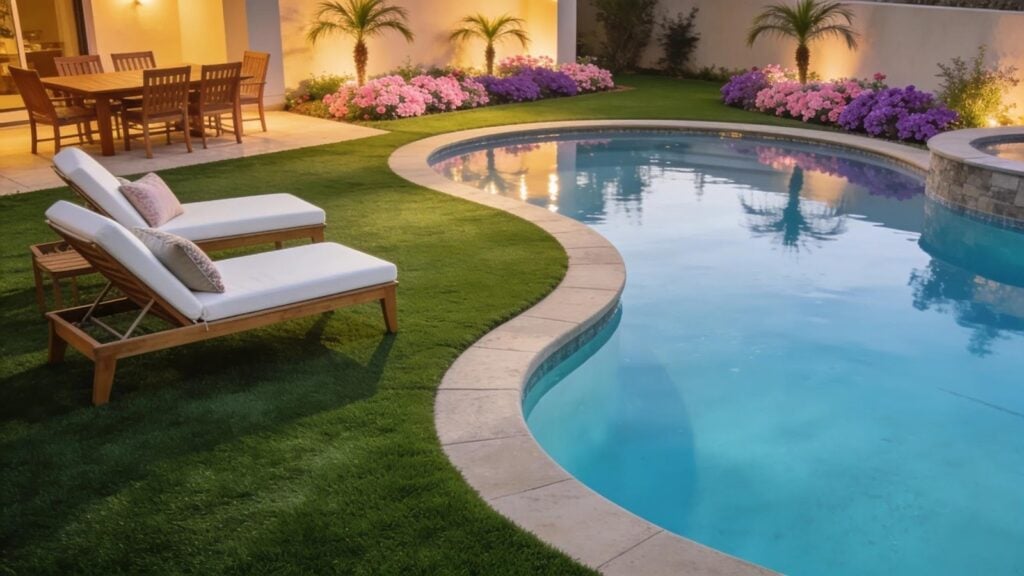
A resort-style pool paired with artificial turf delivers a durable, low‑maintenance outdoor environment that reads as both elegant and functional. This article examines key design elements, material specifications, maintenance protocols, aesthetic choices, and performance benefits of using turf at poolside. With informed decisions, you can create a refined landscape that supports relaxation and entertaining.
Design Elements
Effective luxury backyard design balances form and function. Specify slip‑resistant turf—texture, pile direction, and backing affect traction—around wet areas. Incorporate soft ambient lighting to extend usable hours. Add water features and structured planters to introduce contrast and soften hard surfaces.
Materials Used
Material selection determines long‑term performance. Select UV‑stabilized turf to retain color and fiber integrity under prolonged sun exposure. Use decorative stone to add texture and contrast. Choose weather‑rated fixtures for nighttime illumination to ensure reliable, low‑maintenance operation.
Maintenance Requirements
Routine maintenance preserves appearance and function. Regular brushing realigns fibers; rinsing removes debris and salts; periodic infill replenishment maintains cushioning and ballast. Monthly inspections identify wear before it becomes a larger repair issue.
| Maintenance Task | Recommended Frequency |
|---|---|
| Regular brushing | Weekly |
| Rinsing with water | Every few weeks |
| Infill replenishment | Annually |
| Wear inspection | Monthly |
Adhering to these schedules helps maintain turf aesthetics and performance. For installation supplies and compatible products, explore our products.
What Are the Key Benefits of Using Artificial Turf for Resort-Style Pool Decking?
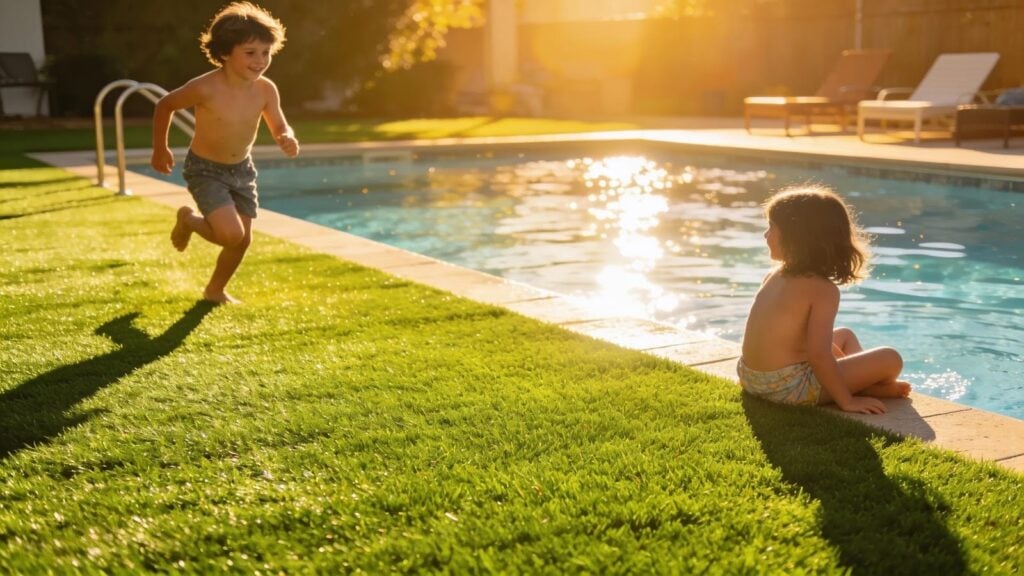
Artificial turf around pools delivers several practical benefits that support luxury landscaping objectives and reduce long‑term upkeep.
- Durability: Artificial turf can withstand high foot traffic and resist damage from pool chemicals, ensuring a long-lasting surface.
- Low Maintenance: Unlike natural grass, artificial turf requires minimal maintenance, eliminating the need for mowing and regular watering.
- Cost-Effectiveness: Over time, artificial turf can be more cost-effective than conventional grass, especially when considering water and maintenance costs.
Together, these characteristics make artificial turf a pragmatic choice for upscale pool environments.
How Does Synthetic Turf Enhance Luxury Backyard Aesthetics?
Synthetic turf provides a consistent, manicured plane that integrates smoothly with pools, decks, and seating areas. Customizable pile heights and infill types let you balance appearance, softness, and drainage. Turf also supplies a cushioned surface suitable for play without sacrificing a refined visual presentation.
What Safety and Maintenance Advantages Does Artificial Turf Offer Around Pools?
Poolside conditions demand safety and straightforward upkeep. Artificial turf addresses both through engineered surface textures, drainage features, and reduced maintenance needs.
- Slip-Resistant Surface: This feature decreases the likelihood of slips and falls, a critical consideration around pools.
- Low Maintenance Care: With minimal upkeep needed, synthetic turf provides a worry-free pool area that remains attractive year-round.
- Effective Drainage: Designed with drainage features, artificial turf efficiently handles water runoff, preventing pooling near the pool’s edge.
Those design and performance attributes improve safety and lower lifecycle maintenance demands for poolside installations.
Which Artificial Turf Types Are Best Suited for Poolside and Resort Backyard Designs?
Select turf fiber materials for the combination of durability and aesthetic realism you need. Nylon and polyethylene are common choices for longevity and visual quality. Prioritize products with engineered drainage systems and appropriate pile specifications for poolside use.
How Do UV Resistance and Heat Tolerance Vary Among Synthetic Turf Options?
UV resistance and heat tolerance differ across product lines and directly affect colorfastness and user comfort.
- UV Resistance: Turf with better UV resistance will maintain its color and integrity when exposed to sunlight for prolonged periods.
- Heat Tolerance: It’s important to choose artificial turf that can remain cool to the touch even in high temperatures, particularly important for poolside installations.
Review manufacturer UV‑stability data and surface temperature test results to select turf appropriate for your climate and exposure.
What Are Eco-Friendly Artificial Turf Options for Luxury Backyard Landscaping?
Eco‑focused turf options use recycled content and permeable backings to improve drainage and reduce chemical maintenance. Choosing permeable systems and responsibly manufactured products helps lower environmental impact while maintaining performance.
How to Plan and Execute Poolside Turf Installation for Durable Resort-Style Landscapes?
Start with a cleared, level footprint and a compacted aggregate base. Proper ground preparation, correct drainage profiles, and the use of quality materials are essential to minimize settlement and future maintenance needs.
What Are the Step-by-Step Procedures for Installing Synthetic Grass Near Pools?
Key installation stages for poolside turf include ground preparation, precise seaming and secure anchoring, followed by appropriate post‑installation grooming and infill checks.
- Ground Preparation: Remove existing grass and debris, and level the ground for a smooth surface.
- Installation Techniques: Lay the turf and secure it properly to prevent shifting.
- Post-Installation Maintenance Tips: Once installed, regular cleaning and infill checks will help maintain the turf’s appearance.
Adhering to these steps produces a stable, long‑lasting surface suited to poolside conditions.
Which Synthetic Turf Installation Supplies Are Essential for Pool Surrounds?
Quality results depend on selecting the right supplies: UV‑resistant turf, properly graded aggregate for a stable base, and installation tools designed for accurate cuts and seams.
- Types of Turf: Choose UV-resistant, durable turf suitable for poolside use.
- Materials for a Stable Base: Use crushed stone or gravel for a solid foundation.
- Tools Required for Installation: Essential tools include a utility knife, turf adhesive, and a roller for flattening.
Using the correct materials and tools streamlines installation and improves long‑term performance.
What Maintenance Practices Ensure Longevity and Aesthetic Appeal of Artificial Turf in Luxury Backyards?
Consistent maintenance preserves turf function and appearance. Remove debris, brush fibers to maintain an upright pile, and schedule inspections based on traffic patterns to avoid premature wear.
How to Clean and Preserve Synthetic Turf in High-Traffic Pool Areas?
High‑traffic pool edges require an established cleaning protocol to control debris, stains, and odor risks.
- Regular Cleaning Routines: Establish a routine for brushing and rinsing away dirt and debris.
- Stain Treatment Options: Use safe products to treat stains without damaging the turf.
- Disinfection Practices: Occasional disinfection can help maintain hygiene and prevent odors.
Applying these routines consistently keeps turf sanitary and maintains its visual quality throughout the year.
What Are The Recommended Tips for Seasonal Turf Care in Resort-Style Backyard Settings?
Follow seasonal maintenance to protect turf from weather effects. Inspect and clear debris in spring, monitor wear and UV exposure in summer, and remove leaves in fall to reduce compaction and staining.
Seasonal care prevents weather‑related degradation and extends useful life.
How Does Artificial Turf Integrate With Resort Pool Design Features for Ultimate Outdoor Living?
Artificial turf interfaces easily with patios, seating zones, and planting beds to create cohesive outdoor living spaces. Built‑in cushioning and slip‑resistant surfaces contribute to comfort and safety while maintaining a polished aesthetic.
Which Resort-Style Backyard Features Are Enhanced by Synthetic Turf?
Turf enhances poolside seating, decorative landscapes, and outdoor living zones by providing a consistent, comfortable surface that supports social use and design cohesion.
- Poolside Seating Areas: Turf provides a soft surface that enhances comfort for lounging.
- Decorative Elements: Complementary landscaping can create a cohesive design that draws the eye.
- Outdoor Living Spaces: Turf facilitates areas for socializing and entertainment, enhancing the overall lifestyle experience.
These integrations elevate both the visual and functional quality of luxury outdoor environments.
How Is Artificial Turf Incorporated With Smart Irrigation and Eco-Friendly Systems?
When combined with smart irrigation for planted areas, turf helps reduce overall water consumption and supports a sustainable landscape strategy. Permeable systems and targeted irrigation for non‑turf areas optimize water use.
Who Should Choose Artificial Turf for Resort-Style Pools: Contractor, Landscaper, or DIY Homeowner?
Artificial turf suits homeowners seeking low upkeep, contractors offering durable solutions, and landscapers expanding design services. Each group benefits from turf’s longevity, aesthetic consistency, and maintenance advantages.
What Support and Resources Does Artificial Turf Express Provide for Installation and Design?
Artificial Turf Express supplies installation guidelines, visual design examples, and customer support to assist with product selection and installation planning.
- Installation Guidelines: Comprehensive instructions for successful installation can be found in their resources.
- Design Examples: Inspiration can be drawn from visual examples that highlight successful applications of artificial turf.
- Customer Support Options: Helpful support teams are available to guide customers through their purchase and installation processes.
These resources help customers make informed choices and execute installations with confidence.
How to Evaluate Artificial Turf Options and Installation Services in the Greater Bay Area?
Evaluate products and installers by examining material quality, UV resistance, drainage capability, installer reviews, and total cost of ownership rather than upfront price alone.
- Product Quality: Look for turf options that feature high UV resistance and quality materials.
- Supplier Reputation: Research customer reviews and industry feedback on installation service providers.
- Cost Considerations: Balance product quality with pricing to ensure a satisfactory investment.
- For expert advice and comprehensive solutions, consider reaching out to specialists such as Artificial Turf Express for your project needs.
A structured evaluation process enables confident selection of the best products and services for resort‑style backyard projects.
Frequently Asked Questions
What are the best colors for artificial turf to match a resort-style pool?
Choose natural green tones that mimic live turf for a refined appearance. Lighter greens read contemporary; darker greens frame pools and furnishings. Use stone or planted contrasts to add depth and define circulation paths.
Are there warranties available for artificial turf products?
Reputable manufacturers typically offer warranties from around 8 to 15 years covering material and quality defects. Verify the specific terms, exclusions, and required maintenance records to support any claim.
Can I install artificial turf myself, or should I hire a professional?
DIY installation is possible for experienced homeowners, but professionals ensure correct base preparation, drainage profiling, and seam integrity—factors that affect longevity and performance. Hire a pro if you want assurance of optimal results.
What are the environmental impacts of artificial turf?
Artificial turf reduces water consumption compared with natural lawns but uses synthetic materials that raise recyclability and heat‑retention concerns. Selecting products with recycled content and permeable backings mitigates some impacts and improves drainage.
How do I choose the right maintenance products for artificial turf?
Use turf‑safe cleaners and non‑abrasive tools such as rubber‑bristle brooms and grooming rakes. Follow manufacturer guidance to avoid degrading fibers. Regular, appropriate maintenance preserves appearance and prolongs service life.
What should I do if my artificial turf gets damaged?
Minor tears and stains can often be repaired with turf adhesive or a matching patch. A professional should assess broader issues to ensure a seamless repair. Frequent inspections catch damage early and reduce repair scope.
Conclusion
Strategic use of artificial turf around a resort‑style pool enhances aesthetics, safety and long‑term durability while lowering routine maintenance. Contact our expert team to review specifications and product options tailored to your project and convert your landscape into a premium retreat.
