
Choosing between premium artificial grass and standard turf affects both appearance and function. This guide compares quality, durability, and maintenance requirements so homeowners and landscapers can select the turf that meets their performance and aesthetic objectives. We summarise core material differences and practical factors that determine the right turf for each project.
Maintaining natural grass can be impractical in some climates or costly to sustain. Both premium and standard artificial grass address those issues, but with different performance profiles and use cases. This article examines how each turf type performs across residential, commercial, and recreational settings and highlights recent technological improvements in synthetic grass.
Comparison of Premium Artificial Grass and Standard Turf
This comparison evaluates the main performance criteria: material quality, expected lifespan, routine maintenance, and suitability for application.
Quality
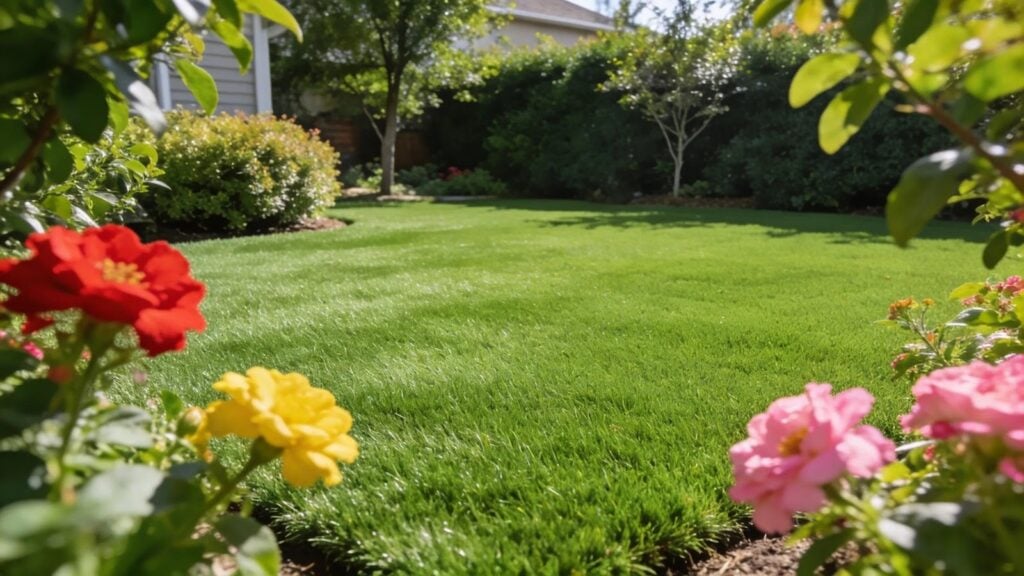
Premium artificial grass is manufactured from higher-grade fibers and construction techniques to mimic natural grass, looking and feeling better. Advanced fiber technologies and UV stabilizers preserve color and texture under sunlight, resulting in a more realistic surface. Standard turf uses simpler materials and construction, which typically produces a less natural appearance and tactile response.
Because premium turf more closely replicates natural grass, it is often the preferred choice for visible landscape areas where aesthetics matter most, such as front lawns and formal gardens.
Durability
Premium turf is engineered to resist wear from foot traffic and weathering. With higher-quality fibers and reinforced backing, premium installations typically last 15–20 years, depending on material grade and installation quality. Standard turf, made from lower-spec components, generally reaches 5–10 years before performance and appearance decline.
The longer service life of premium turf can reduce total lifecycle costs for high-use areas such as sports fields and playgrounds, offsetting its higher initial price through fewer replacements.
Maintenance
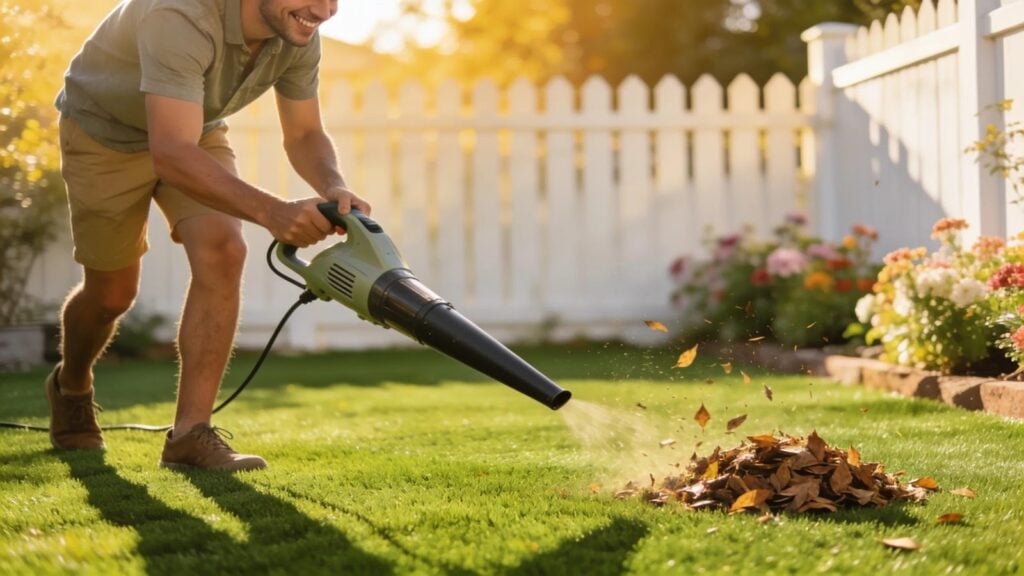
Maintenance frequency and intensity differ between premium and standard turf. Premium products are built to resist staining and damage, so cleaning and brushing cycles are less frequent. They also perform better against pet waste and common stains.
Standard turf typically requires more routine tasks—brushing to restore pile, washing to remove residues, and periodic infill topping—to maintain appearance and surface function. These ongoing tasks increase long-term upkeep costs compared with premium options.
Suitability for Various Applications
Turf choice depends on the use case. Premium artificial grass suits residential frontages, high-end commercial landscaping, and performance-driven sports facilities where appearance and durability are priorities. Standard turf is appropriate for budget-focused projects or less visible zones where cost is the main constraint.
Match the turf specification to the intended function: prioritize premium options for high-visibility, high-traffic, or performance-critical areas and standard turf where visual demands and usage are lower.
What Are the Core Differences Between Premium and Standard Artificial Turf?
The main distinctions are material grade, manufacturing processes, and the resulting user experience. Premium turf uses tighter quality control and superior inputs, which translate to better longevity, feel,l and weather resistance. Standard turf is produced with lower-spec techniques, resulting in greater variance in performance.
When selecting turf, evaluate these materials and construction differences against site-specific requirements such as local climate, expected foot traffic, and visual goals.
How Do Material Fibers Impact Turf Quality and Performance?
Fiber composition strongly affects texture, durability, and UV resistance. Common polymers are polyethylene and polypropylene, each with distinct properties relevant to performance and comfort.
Polyethylene offers a softer, more natural touch suited to lawns and play areas. Polypropylene is lower cost but less durable. Choose fiber type based on the balance between tactile needs and expected loading.
What Are the Variations in Pile Height, Density, and Backing Materials?
Key physical parameters include pile height (blade length), yarn density (blades per square inch), and backing composition. Pile height and density control appearance and underfoot cushioning; backing materials determine dimensional stability and drainage performance.
Premium turf typically features greater pile height and higher yarn density for a fuller, more natural look, plus superior backing materials that improve longevity and weather resistance. Select specifications that align with your visual and functional requirements.
Consider pile height and density in relation to intended use: taller, denser piles for aesthetic lawns; shorter, denser constructions for heavy-use or sports applications.
How Does Synthetic Grass Durability Compare Between Premium and Standard Options?
Durability derives from fiber strength, UV stabilization, and backing integrity. Premium systems combine higher-spec fibers with reinforced backing to resist abrasion and environmental degradation.
Standard turf uses lower-grade components that are more susceptible to premature wear, particularly under frequent traffic or harsh climates. Selecting a more durable option reduces replacement frequency and overall maintenance.
What Are the Expected Lifespans and UV Resistance Ratings?
Premium artificial grass typically achieves 15–25 years of service life when properly installed and maintained, supported by higher UV resistance that preserves color and texture. Standard turf commonly provides 5–10 years before visible decline due to lower UV stabilization and material strength.
Evaluating lifespan and UV performance helps forecast replacement cycles and long-term cost implications for your project.
How Do Warranty Terms Reflect Product Durability?
Warranties indicate the manufacturer’s confidence and the anticipated service life. Premium turf often carries extended warranties—commonly 8–15 years—reflecting superior material and manufacturing standards. Standard turf warranties are usually shorter, around five years.
Review warranty scope and exclusions closely; they are practical indicators of expected durability and manufacturer support.
What Installation Supplies and Best Practices Are Recommended for Different Turf Types?
Correct installation preserves turf performance. Premium systems frequently require higher-grade supplies—geotextiles, seaming tape, and specific infill blends—to deliver designed longevity and drainage.
Adopt best practices: prepare a stable subbase, ensure accurate grading, and use qualified installers. Proper installation maximizes the functional life and appearance of any turf system.
How Should Customers Choose Between Premium Artificial Grass and Standard Turf?
Select turf by weighing budget, intended use, and maintenance capacity. Choose premium turf when appearance, durability, and reduced upkeep maintenance justify the higher upfront costs.
Opt for standard turf when initial budget constraints dominate, and the application has lower performance or visibility requirements. Align your choice with long-term maintenance plans and expected usage.
Comparison of Premium Artificial Grass vs. Standard Turf
Beyond purchase price, compare lifespan, appearance, traffic resistance, maintenance burden, and UV performance to determine total value.
| Feature | Premium Artificial Grass | Standard Turf |
|---|---|---|
| Lifespan | 15-25 years | 5-10 years |
| Appearance | Realistic, lush look | Basic appearance |
| Durability | High foot traffic resistance | Lower foot traffic resistance |
| Maintenance | Minimal maintenance required | Higher upkeep needs |
| UV Resistance | High | Moderate to low |
Use this comparison to prioritize which attributes—appearance, lifespan, or cost—matter most for your site.
What Use Case Scenarios Favor Premium Turf Over Standard Options?
Premium turf is preferred for residential frontages, sports facilities, and recreation areas where appearance and performance are essential. Typical use cases include:
- High-visibility residential areas: Homeowners seeking strong curb appeal benefit from premium turf’s lifelike look.
- Sports fields: Premium construction maintains playability and resists heavy use.
- Pet-friendly spaces: Premium options often include better drainage and reduced odor retention, improving usability for pet owners.
Which Environmental and Maintenance Factors Influence Turf Selection?
Key factors are climate, traffic load, and maintenance capacity. Areas with strong sunlight require higher UV resistance; high-traffic zones need more durable constructions; limited maintenance availability favors premium, lower-upkeep options.
Assess these factors to match turf performance to local conditions and daily use patterns.
What Is the Cost Comparison and Return on Investment for Premium vs. Standard Turf?
Evaluate both initial expense and lifecycle costs. Premium turf has a higher upfront price but often lowers recurring maintenance and replacement expenses, improving long-term value for frequently used or visible areas.
Standard turf lowers the initial outlay but can lead to higher total costs over time due to more frequent upkeep and earlier replacement.
How Do Initial Costs and Long-Term Savings Compare?
The trade-off between turf options is defined by the balance between initial requirements and long-term performance: premium turf offers greater durability and lower maintenance needs, while standard turf is typically designed for less intensive applications. Consider long-term reductions in water, fertilizer and maintenance when comparing the total cost of ownership.
Use a lifecycle cost approach—factoring maintenance, replacement intervals, and utility savings—to determine the most economical option for your project.
Is Premium Turf Worth the Extra Investment Considering Durability and Performance?
If priorities are aesthetics, longevity, and reduced maintenance, premium turf typically delivers superior value. For low-use or budget-limited projects, standard turf may be sufficient.
Balance immediate budget constraints against projected lifecycle costs and desired performance to decide which option delivers the best return for your needs.
What Are the Latest Industry Trends and Innovations Influencing Synthetic Turf Choices?
Industry trends center on sustainability, drainage, and realism. Manufacturers are developing recycled-material options, improved backing designs for water management, and advanced fiber technologies that enhance texture and color retention.
These innovations improve functionality and reduce environmental impact, shaping buyer preferences and product offerings.
How Are 2026-2027 Material Technologies Enhancing Turf Quality?
Research and development for 2026–2027 focus on three areas: increased durability through novel fiber constructions, improved color stability and texture for enhanced realism, and greater use of recycled or lower-impact materials to improve sustainability.
Adopting these technologies lets buyers access turf that better balances performance, aesthetics, and environmental considerations.
What Regional Factors Affect Artificial Turf Adoption in the Greater Bay Area?
Regional drivers include water conservation priorities, high aesthetic expectations, and local regulations that encourage sustainable landscaping. These factors increase demand for high-quality synthetic grass in the Greater Bay Area.
Understanding local incentives and restrictions helps consumers choose turf that meets regulatory requirements and regional performance expectations.
For homeowners and landscapers seeking a broad selection of quality synthetic grass products, reviewing available product lines is a recommended first step. Whether you prioritize premium aesthetics and durability or a more budget-conscious standard option, exploring product details helps clarify which turf meets your project requirements. For full specifications, see the products page.
Consulting specialists can clarify technical specifications and site-specific recommendations. At Artificial Turf Express, we provide technical guidance and product matching to help you select the most appropriate turf system.
To choose the best turf for your project, evaluate product specifications against your site conditions. If you need tailored advice, contact our team through the contact page for expert assistance.
Frequently Asked Questions
What is the installation process like for premium artificial grass compared to standard turf?
Installation of premium turf typically requires more precise methods and higher-spec materials—quality backing, geotextiles, and proper infill selection—to achieve the designed durability and appearance. Experienced installers are recommended to ensure proper compaction, grading, and seaming. Standard turf can tolerate simpler installation techniques, but inadequate site preparation may reduce its effective lifespan.
How does artificial grass affect the environment compared to natural grass?
Artificial grass can reduce water, fertilizer and pesticide use compared with natural lawns, which is advantageous in water-stressed regions. However, production and end-of-life disposal of synthetic materials present environmental trade-offs. Evaluate manufacturers’ recycling programs and recycled-content claims when assessing overall sustainability. Premium products increasingly incorporate recycled fibers to lower lifecycle impact.
Can artificial grass be used in all climates?
Artificial grass is suitable in many climates, but product specifications matter. Premium turf often includes UV stabilization and engineered drainage to perform under high solar exposure and heavy rainfall. Standard turf may deteriorate faster in extreme climates. Assess local temperature ranges, solar intensity, and precipitation when selecting a product.
What maintenance is required for artificial grass?
Maintenance varies by product quality. Premium turf generally needs occasional brushing, targeted cleaning, and periodic infill checks. Its construction resists staining and pet-related issues. Standard turf requires more frequent washing, brushing, and infill replenishment to preserve appearance and function. Match maintenance plans to the chosen product’s requirements.
What are the costs associated with premium and standard artificial grass?
The financial decision between turf options involves balancing the initial investment with lifecycle performance. Premium turf typically requires a higher upfront cost but can lead to lower long-term expenses due to its enhanced durability and reduced maintenance needs. Conversely, standard turf offers a more accessible entry price but may incur higher total costs over time. Factor in reduced water, maintenance, and replacement costs for premium options when calculating the total cost of ownership.
Are there specific brands or manufacturers known for quality turf products?
Several manufacturers specialize in higher-grade turf products and invest in material innovation. When evaluating brands, check product datasheets, warranty terms, industry certifications, and user reviews to verify performance claims. Manufacturer warranties and third-party certifications provide objective indicators of product reliability for specific landscaping needs.
Conclusion
Understanding the technical differences between premium and standard artificial grass allows you to match turf specifications to site needs. Premium turf delivers greater realism, durability, and reduced maintenance, making it the preferred option for visible or high-use areas. Review product specifications, warranties, and installation practices to make a durable, cost-effective choice that meets your aesthetic and performance requirements.
