

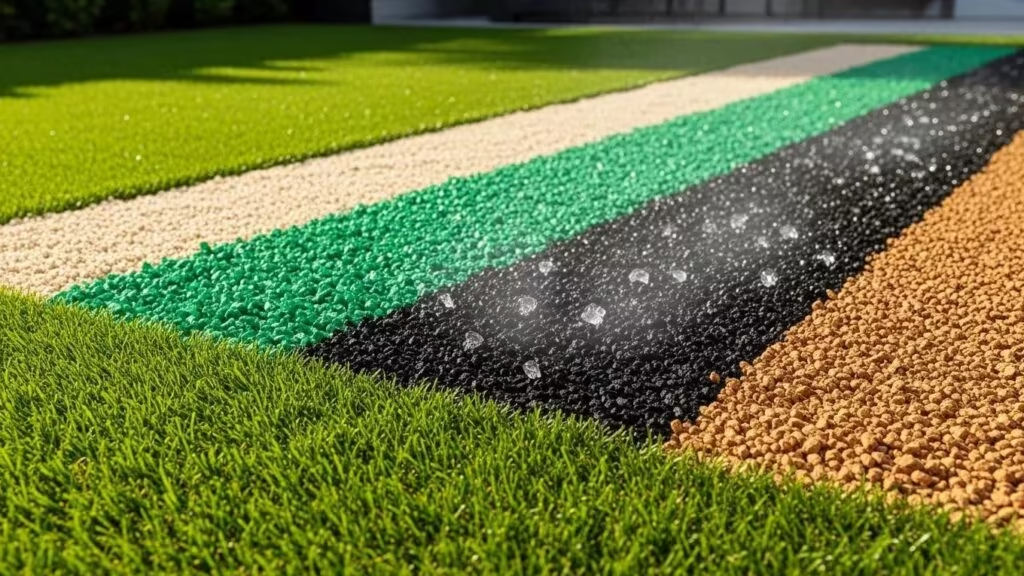
Choosing the correct infill directly affects the performance and longevity of synthetic turf. Infill provides stability, cushioning (shock absorption), and drainage. This guide compares common infill types and explains how to match their properties to your application—residential lawns, pet areas, or sports fields—so you can select the best option based on use, durability, environmental impact, and maintenance.
Choosing the Right Infill
Pick an infill by assessing four factors: intended use, expected foot traffic and durability, environmental footprint, and your maintenance plan. Balancing these factors lets you prioritize performance metrics such as cushioning, stability, and drainage to meet project requirements.
Intended Use
Intended use determines which properties matter most. Pet areas need odor control and easy cleaning. Sports fields prioritize shock absorption and playability. Match the infill to the primary function of the turf.
- Best infills for pet areas: Consider using zeolite or coated infills, which help control odors and are easy to maintain.
- Recommended infills for sports fields: Crumb rubber is often preferred for its shock-absorbing properties, making it suitable for high-impact activities.
Durability Needs
Durability requirements depend on traffic and load cycles. High-traffic sites need resilient infills that resist compaction and maintain cushioning over time. Choose materials that have been tested for long-term performance in similar applications.
- Infill options for high-traffic areas: Rubber crumb and acrylic-coated silica sand are excellent choices due to their resilience and longevity.
- Long-lasting materials: Silica sand is also durable and cost-effective, making it a popular choice for various applications.
Environmental Impact
Assess lifecycle impacts when selecting infill. Natural options reduce persistent synthetic waste but may biodegrade faster. Synthetic infills deliver durability but can raise disposal and environmental concerns. Weigh durability against environmental priorities.
- Eco-friendly infill materials: Natural infills such as walnut shells and other organic options can be biodegradable and less harmful to the environment.
- Impact of synthetic vs. natural infills: While synthetic infills like crumb rubber offer durability, they may pose environmental challenges compared to natural alternatives.
Maintenance Requirements
Maintenance varies by material. Match infill choice to how often you can inspect, brush, and top up material. Lower-maintenance options reduce lifecycle effort but may trade off other performance attributes.
- Maintenance tips for sand infill: Regular brushing and occasional top-ups are necessary to keep it effective.
- How to care for rubber crumb infill: This type of infill generally requires less maintenance, but it should be checked for compaction and debris removal.
Common Types of Artificial Turf Infill Materials
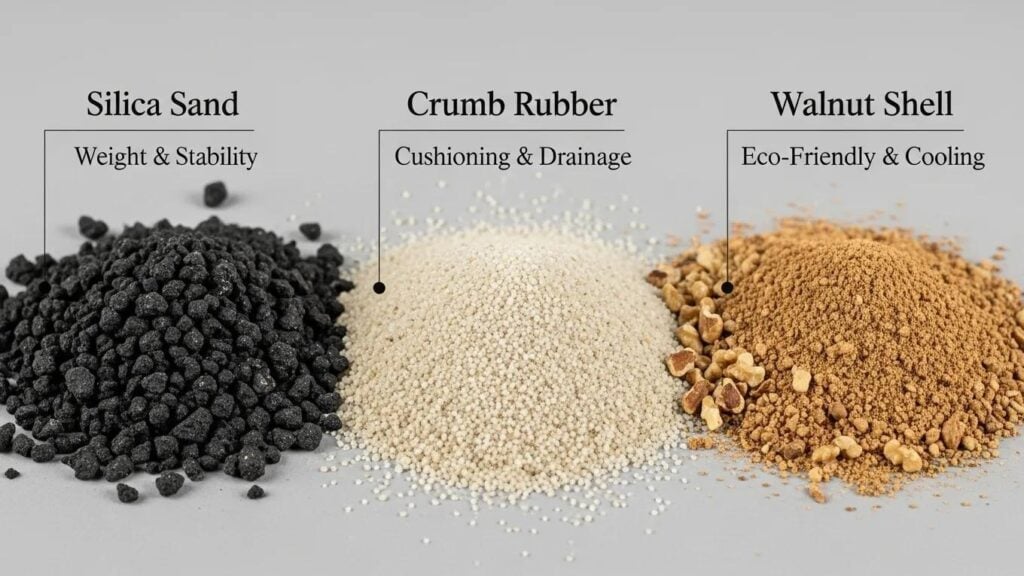
Several infill categories are commonly used. Each offers distinct trade-offs in cost, durability, drainage, odor control, and environmental impact. Review the properties below to identify which align with your project metrics.
Research on turf composition highlights the roles of stabilizing infill (sand) and performance infill (rubber granules) in delivering stability and playability.
Artificial Turf Infill Types: Sand & SBR Granules
Artificial turfs typically consist of a shock-absorbing pad, synthetic grass fibers, a stabilizing infill such as quartz sand to keep the turf in place, and a performance infill—commonly styrene-butadiene rubber (SBR) granules sourced from end-of-life tires—to ensure field playability (Larsen et al. 2015). SBR is widely used as a performance infill (KG2021 2020; Larsen et al. 2015).
Environmental impacts of artificial turf: a scoping review, RA Bohne, 2024
Silica Sand
Silica sand is widely used because it is cost-effective and promotes drainage. It creates a stable base and supports the fiber upright, allowing water to pass through the system.
- Cost-effectiveness of silica sand: It is often more affordable than other infill options, making it a popular choice for budget-conscious projects.
- Drainage properties: Silica sand allows efficient drainage, preventing water pooling on the surface.
Crumb Rubber
Crumb rubber is produced from recycled tires and is valued for its shock-absorbing properties. It reduces impact forces, which is why it’s common on sports fields and playgrounds where player safety and cushioning matter.
- Shock-absorption properties: This infill provides excellent cushioning, reducing the risk of injury during play.
- Environmental concerns: While effective, crumb rubber has faced scrutiny over its environmental impact and potential health risks.
Zeolite / Coated Infill
Zeolite and coated infills are formulated to control odors and retain moisture. They suit pet areas and residential lawns where hygiene and surface temperature management are priorities.
- Odor control capabilities: Zeolite is particularly effective at neutralizing odors, making it a great choice for pet-friendly environments.
- Moisture-retention benefits: These infills help maintain a cooler surface temperature and reduce the need for frequent watering.
Walnut Shell
Walnut shells are a natural, biodegradable option. It provides a softer surface and reduces reliance on synthetic granules, making it suitable for pet areas and environments where eco-friendliness is a priority.
- Eco-friendliness of walnut shells: As natural products, they are less harmful to the environment than synthetic options.
- Suitability for pet areas: Its soft texture makes it comfortable for pets to walk and play on.
Acrylic Coated Silica Sand
Acrylic-coated silica sand combines the mechanical benefits of sand with an antimicrobial surface treatment. It improves hygiene while preserving drainage and stability.
- Benefits of antimicrobial coating: This feature helps prevent bacterial and fungal growth, ensuring a cleaner surface.
- Color options available: Acrylic-coated sand comes in various colors, allowing customization of the turf’s appearance.
Benefits and Drawbacks of Each Infill Type
Compare benefits and drawbacks to match performance targets and maintenance capacity. The table below summarises common trade-offs so you can prioritize cost, durability, hygiene, or environmental impact.
| Infill Type | Benefits | Drawbacks |
|---|---|---|
| Silica Sand | Cost-effective, excellent drainage | Can compact over time |
| Crumb Rubber | Shock absorption, durable | Environmental concerns |
| Zeolite | Odor control, moisture retention | May require more frequent replacement |
| Walnut Shell | Eco-friendly, soft surface | Limited availability |
| Acrylic Coated Sand | Antimicrobial, customizable | Higher cost compared to traditional sand |
The comparison clarifies which materials meet specific project criteria—budget, maintenance, environmental goals, and performance—so you can make a measured choice.
Installation and Maintenance Considerations
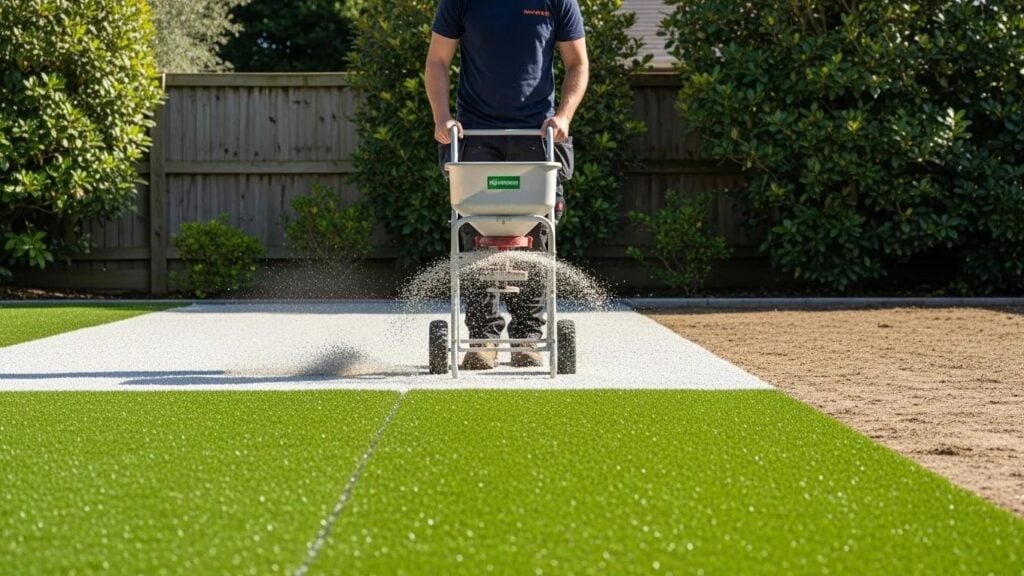
Correct installation and regular maintenance preserve infill function. Installation depth, compaction management, and routine brushing affect drainage, cushioning, and appearance over the turf lifecycle.
- Installation depth recommendations: Generally, 1-2 inches of infill is recommended for optimal performance.
- Maintenance tips for longevity: Regular brushing and cleaning can help maintain the infill’s effectiveness and appearance.
Cost and Environmental Impact
Evaluate both upfront cost and lifecycle impact. Some materials are inexpensive initially but need more upkeep; eco-friendly options often cost more up front but reduce long-term environmental burden.
- Price differences among infill types: While silica sand is often the most affordable, eco-friendly options like walnut shell may come at a premium.
- Sustainability of eco-friendly options: Investing in sustainable materials can reduce your environmental footprint and promote a healthier ecosystem.
By understanding each infill’s characteristics, you can select the material that aligns with project goals and environmental priorities. For quality artificial turf products and installation materials, consider suppliers such as Artificial Turf Express, which serves contractors, landscapers, and DIY homeowners in the Greater Bay Area, including San Jose.
To review available options, see their products.
If you need tailored guidance, you can contact Artificial Turf Express for expert advice and support.
Frequently Asked Questions
What factors should I consider when choosing artificial grass infill?
Consider intended use, expected foot traffic (durability), environmental impact, and maintenance capacity. For example, choose odor-control infill for pet areas and shock-absorbing infill for sports fields. Use those criteria to rank material priorities.
How does the installation depth of infill affect performance?
Installation depth controls cushioning, stability, and drainage. A depth of 1–2 inches is typically recommended. Too little infill reduces support and increases wear; too much can compact and impede drainage.
Are there any health concerns associated with crumb rubber infill?
Crumb rubber, made from recycled tires, has prompted studies on potential chemical exposure. Regulatory reviews vary; many authorities consider it acceptable, but some communities remain cautious. If you’re concerned, evaluate natural or alternative infills.
What maintenance is required for different types of infill?
Maintenance depends on the material. Silica sand needs regular brushing and occasional top-ups to prevent compaction. Crumb rubber generally needs less frequent work but should be checked for compaction and debris. Natural infills may require more frequent replacement.
How do I choose between synthetic and natural infill materials?
Choose synthetic infill for durability and shock absorption; choose natural infill for biodegradability and reduced synthetic waste. Consider performance, sustainability, maintenance frequency, and end-of-life disposal to decide which best aligns with your priorities.
What are the cost differences among various infill types?
Costs vary: silica sand is typically the most affordable. Eco-friendly options like walnut shell or acrylic-coated sand usually cost more due to the materials or treatments involved. Budget for both initial purchase and long-term maintenance when comparing options.
Can I mix different types of infill materials?
Mixing infills can combine benefits—for example, sand for drainage plus crumb rubber for cushioning. Ensure materials are compatible to avoid compaction or uneven surfaces, and consult a professional or supplier before blending materials.
Conclusion
Selecting the right infill maximizes performance, durability, and sustainability. Match material properties to your project requirements and maintenance plan to extend turf life. For expert guidance and quality products, consult specialized suppliers and review technical specifications before finalizing your choice.


